


Sustainable consumption vs. capitalist growth Model: time to rethink about greed in the 21st Century
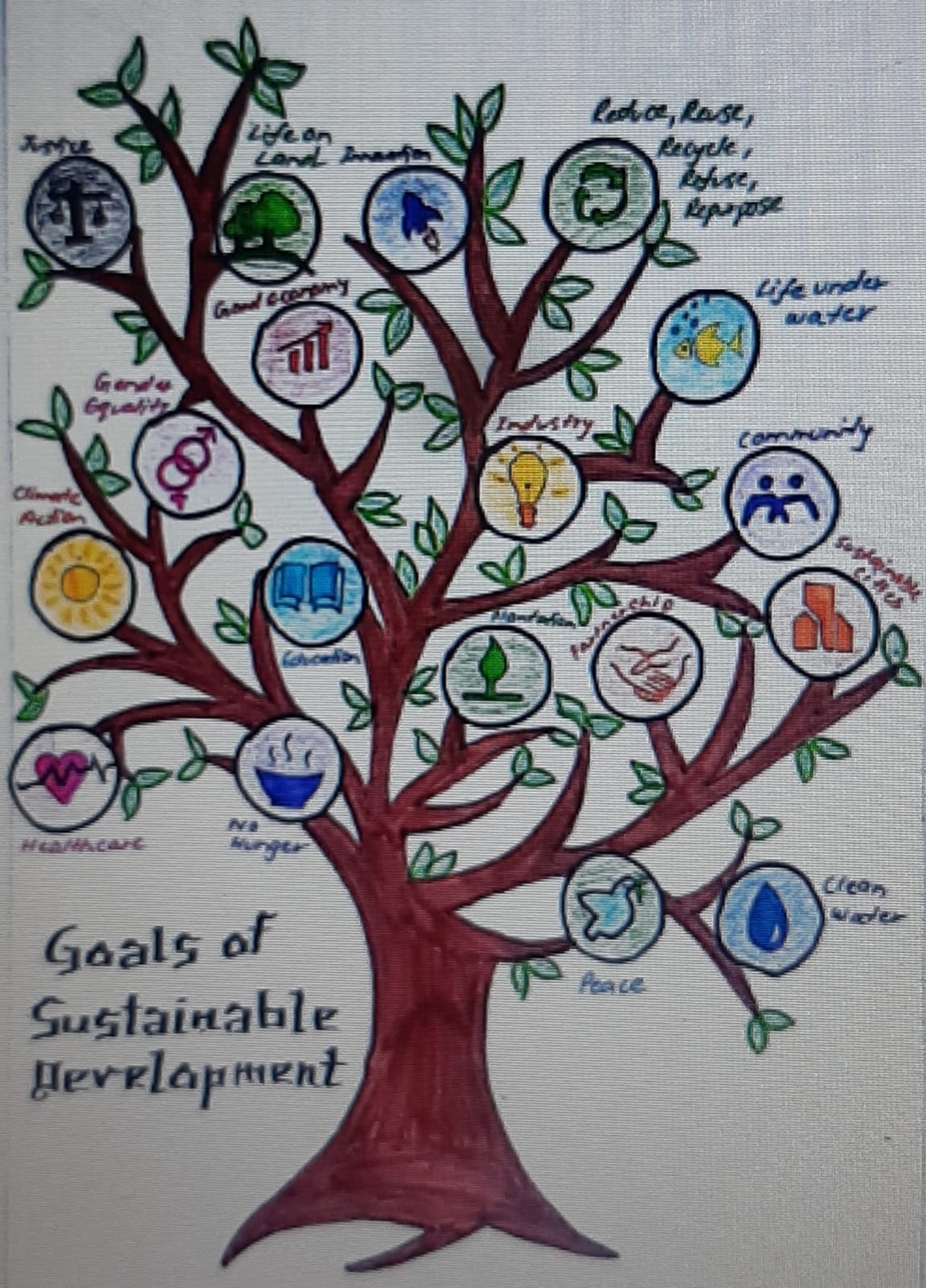
The debate between sustainable consumption and the capitalist growth model is not about choosing one over the other in absolute terms. Rather, it is about redefining capitalism itself. A more responsible form of capitalism—often termed “sustainable capitalism” or “inclusive growth”—seeks to integrate economic, social, and environmental objectives, writes former IAS officer V.S.Pandey
Sustainable development vs blind relentless pursuit of wealth generation- human civilisation has faced this conundrum for the past hundreds of years. There have been many votaries for sustainable growth but these voices did not become salient. Assaulted by the perils of global warming and increasing horrific economic inequalities of lopsided development -India is now forced to address this critical issue . In a recent gathering of renowned intellectuals in the national capital, the issue figured prominently on the occasion of the launch of a foundation named after former Union Minister Dr. Murli Manohar Joshi, who himself is a strong proponent of the concept of sustainable consumption and sustainable development.
In the early decades of the 21st century, the global economy stands at the crossroads. On one side lies the traditional capitalist model of economic development—anchored in continuous growth, mass production, and ever-expanding consumption. On the other stands an emerging paradigm that emphasizes sustainable consumption, ecological balance, and long-term human well-being. The tension between these two approaches is not merely academic; it defines the future trajectory of societies, economies, and the planet itself.
The capitalist model, which has dominated global economic thinking for over two centuries, is built on a simple premise: growth is good. Higher production leads to higher incomes, which in turn fuels greater consumption, creating a virtuous cycle of economic expansion. This model has undeniably delivered significant gains—lifting millions out of poverty, fostering technological innovation, and improving living standards across much of the world.
However, this success has come at a pyrrhic cost. The relentless pursuit of growth has led to over-exploitation of natural resources, environmental degradation, and rising inequality. Forests have been depleted, oceans polluted, and the atmosphere burdened with greenhouse gases. The model assumes that natural resources are either infinite or substitutable—an assumption increasingly challenged by ecological realities.
Sustainable consumption, by contrast, seeks to align economic activity with the planet’s ecological limits. It emphasizes using resources efficiently, minimizing waste, and ensuring that unbridled consumption patterns do not compromise the ability of future generations to meet their basic needs. Rather than focusing solely on increasing output, this approach prioritizes the quality and sustainability of growth.
At its core, sustainable consumption challenges the very foundation of consumerism that underpins rapacious capitalism. It questions whether higher consumption necessarily leads to greater well-being. Evidence suggests that beyond a certain threshold, increases in income and consumption yield diminishing returns in terms of happiness and life satisfaction. This raises a critical question: should economies continue to chase growth for its own sake, or should they redefine progress in broader, more holistic terms?
One of the key criticisms of the capitalist model is its externalization of costs. Environmental damage, social inequality, and public health impacts are often treated as “externalities”—costs not reflected in market prices. This leads to a distorted system where unsustainable practices appear economically viable. For example, industries may profit from polluting activities while the broader society bears the cost through degraded health and ecosystems.
Sustainable consumption advocates argue for internalizing these costs through policy interventions such as carbon pricing, stricter environmental regulations, and incentives for green technologies. By aligning market signals with ecological realities, economies can shift toward more sustainable patterns of production and consumption.
Yet, transitioning away from the traditional capitalist model is difficult. Modern economies are deeply entrenched in systems that reward growth and consumption. Governments rely on economic expansion for revenue and employment generation. Corporations are driven by profit maximization and shareholder expectations. Consumers, conditioned by decades of advertising and cultural norms, often equate consumption with success and status.
Moreover, in developing countries like India, the debate takes on an added layer of complexity. For millions still living in poverty, increased consumption is not a luxury but a necessity. The challenge, therefore, is not to halt growth but to pursue a form of growth that is inclusive and sustainable. This requires a nuanced approach that balances developmental needs with environmental constraints.
Technological innovation offers a potential bridge between these competing paradigms. Advances in renewable energy, circular economy practices, and sustainable agriculture demonstrate that it is possible to decouple economic growth from environmental degradation. However, technology alone cannot solve the problem. Without changes in consumption patterns and institutional frameworks, efficiency gains may simply lead to higher overall consumption—a phenomenon known as the “rebound effect.”
A radical shift toward sustainable consumption also demands a cultural transformation. Societies need to move away from the notion that more is always better. Concepts such as minimalism, sharing economies, and responsible consumption must gain mainstream acceptance. Education and awareness play a crucial role in fostering this shift, enabling individuals to make informed ethical choices about their consumption habits.
Policy frameworks must also evolve. Governments must play a pivotal role by promoting sustainable infrastructure, supporting green industries, and discouraging wasteful practices. Urban planning, public transport systems, and energy policies must be aligned with sustainability goals. At the same time, global cooperation is essential, as environmental challenges transcend national boundaries.
The debate between sustainable consumption and the capitalist growth model is not about choosing one over the other in absolute terms. Rather, it is about redefining capitalism itself. A more responsible form of capitalism—often termed “sustainable capitalism” or “inclusive growth”—seeks to integrate economic, social, and environmental objectives.
In conclusion, the current moment presents both a challenge and an opportunity. The limitations of the traditional growth model are glaringly evident, while the urgency of environmental crises demands immediate action. Sustainable consumption offers a pathway toward a more balanced and resilient future, but realizing this vision requires systemic change—across markets, policies, and mindsets. The question is no longer whether change is necessary, but whether it will come in time . Gandhiji resonates -we have enough for everybody’s needs but not enough for everybody’s greed .Will we be able to curb our avarice and responsibly sustain the growth of our civilisation?
(Vijay Shankar Pandey is former Secretary Government of India)