

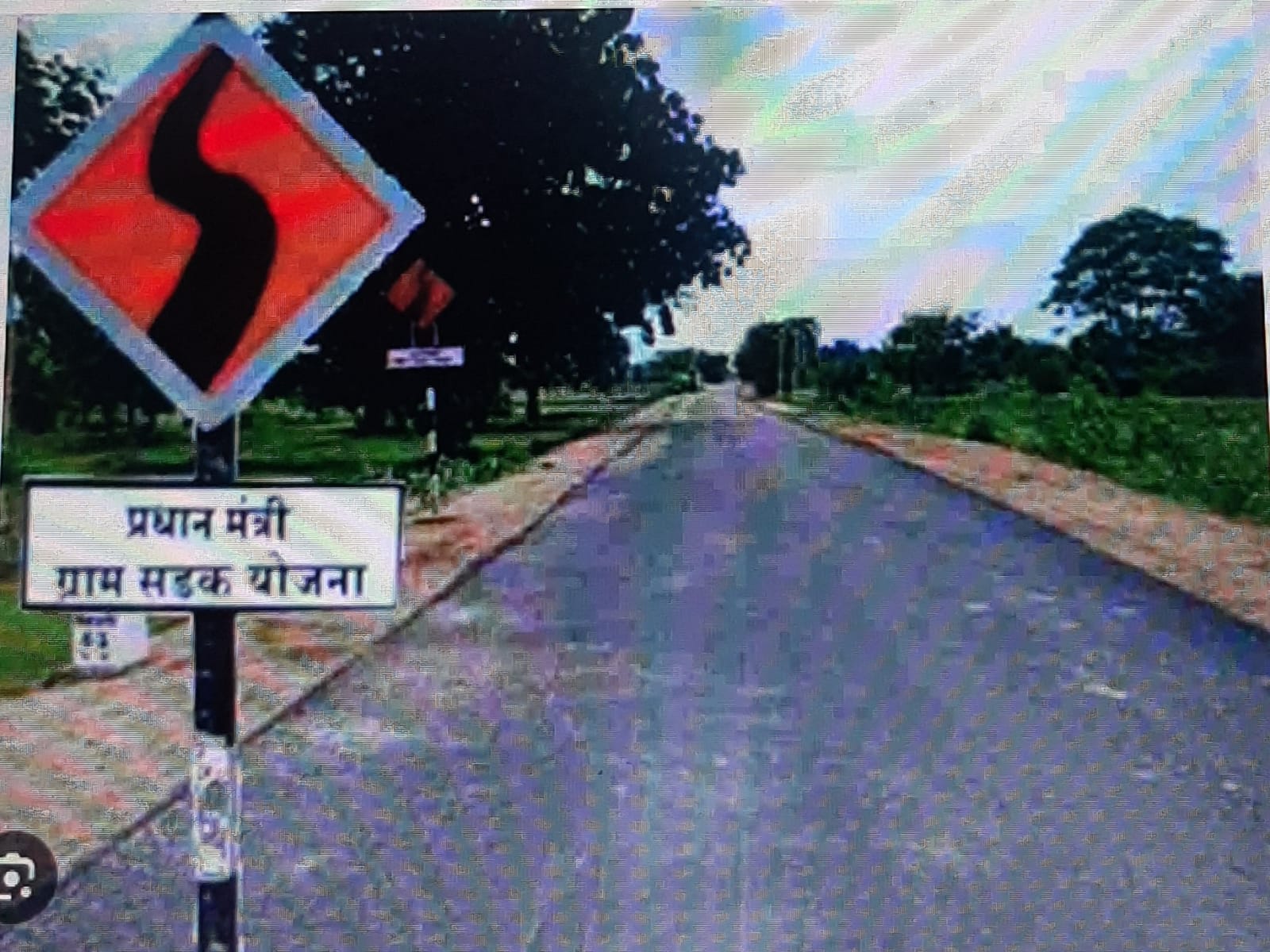
The scheme seems to have been affected by the scourge of corruption. How else can one explain the frequent recovery of crores of rupees in unaccounted cash from residences of senior officials connected with the implementation of rural roads scheme in several states such as Bihar, Uttar Pradesh, Madhya Pardesh to name a few, writes former IAS officer Sunil Kumar
India in 2026 is as much a story of improved world class road connectivity with Uttar Pradesh boasting of the largest network of operational expressways (closely followed by Maharashtra), a vast network of six & four lane national & state highways as about the largest network of rural roads in the world with Rural Access Index of over 99%. The year 2025 marked the 25th year of the Pradhan Mantri Gram Sadak Yojana (PMGSY), widely hailed as one of the most successful and well designed schemes of Government of India (GoI).
In this paper I will be focusing on the making of the PMGSY, the story behind its official launch by the then Prime Minister Shri Atal Bihari Vajpayee on 25th December, 2000 (which also happened to be his birthday) and how it fares on the public policy formulation framework articulated by Dr. Kelkar and Ajay Shah in their book “In Service of the Republic”.
Upon joining the Ministry of Rural Development immediatefly after the Republic Day in January 2000, I was initially allocated work in the Panchayati Raj & Rural Roads division. I was supposed to look after the Panchayati Raj related work and another colleague Ms. Babni Lal, an Indian Information Service officer was looking after the rural roads work. However, within a couple of weeks a separate Rural Roads division was created in the Ministry and this work was allocated to Joint Secretary, Dr. J.S.Sarma, a 1971 batch IAS officer of Andhra Pradesh cadre who was then looking after the Swarnajayanti Gram Swarojgar Yojana (SGSY) (a highly successful scheme which led to formation of lakhs of women Self-Help Groups (SHGs) across the States) and I was attached to him. Shri Arun Bhatnagar, an IAS officer of Madhya Pradesh cadre also joined the Ministry soon thereafter in February 2000 as Secretary. The then Minister Shri Sundar Lal Patwa called the Secretary and Joint Secretary and told them that preparing and launching the Rural Roads scheme was the top priority of the Government.
A simple observation by the then PM on the occasion of launching of the Golden Quadrilateral National Highway project regarding whether a similar scheme for construction of roads in the rural areas could be thought of triggered action in GoI. This casual observation led to announcement of launching a new scheme for construction of rural roads in the union budget and also a sizeable allocation of Rs.2500 crore even before the scheme had been prepared. Thus, the pressure was on the Rural Development Minister to live upto the expectations of the PM. Towards this end, the Minister was handpicking officers and sending the clear message that the Rural Roads scheme had to be launched within the next few months after obtaining all necessary approvals and it was to be accorded top priority.
The Minister had earlier constituted a National Rural Roads Development Committee[i] (NRRDC) under the chairmanship of Shri Nitin Gadkari, the former Minister of PWD in Maharashtra and the architect behind the Mumbai-Pune expressway project executed by the Maharashtra State Road Development Corporation (MSRDC). Shri Gadkari was also instrumental in building over 55 flyovers all across Mumbai. However, in the ensuing elections, the Shiv Sena-BJP coalition government had lost power and Congress-NCP government had come to power. This background is important because the Minister instructed us (Joint Secretary & Deputy Secretary) to meet Shri Gadkari, seek his inputs and work on the recommendations of the HPC.
The NRRDC made a presentation before the Prime Minister on 7th February, 2000. This was attended by senior Ministers and the Deputy Chairman of the Planning Commission. The outcome of this meeting was the Budget announcement regarding initiation of a new rural roads programme and an allocation of Rs.2500 crore in the union budget mentioned earlier.
The NRRDC had constituted three sub-groups to study the individual aspects in greater depth and give their recommendations to the committee. These sub-groups were to collect data regarding present level of village connectivity, prepare optimal rural road design and estimation of per kilometer cost and identification of sources of sustainable finance for rural roads. Experts drawn from States, research institutions like the Central Road Research Institute (CRRI), financial institutions, IT companies like CDAC, Pune and from Ministries in Government of India in the NRRDC contributed immensely to the final report prepared by the Committee.
The report of the Committee was received in May, 2000. It was a very comprehensive report and path-breaking in several ways. In reply to an Unstarred Question[ii] in Parliament, the following reply was given on 04.12.2001:
“The National Rural Road Development Committee (NRRDC) was set up in January, 2000, under the Chairmanship of Shri Nitin Gadkari. The Committee was, inter alia, to identify unconnected villages in India, to determine the magnitude of the Programme and assess the requirement of funds and sources of raising the same, to determine the specifications of roads as per soil conditions and to make suggestions regarding the Implementing Agency/ies.”
Once the report was received in the Ministry, the detailed examination of the report and thereafter preparation of the Note for consideration of the Expenditure Finance Committee (EFC) and then the Union Cabinet was undertaken in the division. We toured the states and saw for ourselves the condition of rural roads in different districts having different soil types. For instance we understood that unless there is a top layer of good clayey soil over Black Cotton soil, roads will not have a long life no matter what be the thickness of the crust. Likewise, waterlogging on both sides of the road with improper or negligible cross-drainage (CD) structures also adversely impact the condition of roads. Poor design, varying technical specifications of rural roads in different States (more due to financial constraints) and lack of quality control during construction phase were interalia responsible for the poor quality of rural roads in almost all States in the year 2000. The rural roads in the southern states were only relatively better.
The quality of data regarding number of unconnected habitations was also widely misleading. The engineering departments like the Public Works Department (PWD) and the Rural Engineering Service (RES) were infamous for coming up with different figures every time they were asked to provide such figures. Reliable data relating to rural road connectivity was just not available. The definition (and the understanding thereof) varied from State to State. Engineers were prone to wilt under pressure from the MLAs and MPs and they played around with figures depending on the funding agency and the requirements specified in their guidelines.
It may be recalled that NABARD was providing funds to States from the Rural Infrastructure Development Fund (RIDF) set up by the union government. States like Uttar Pradesh were accessing funds under the scheme from NABARD for constuction of rural roads. The focus was on taking up more length of rural roads covering the constituencies of legislators rather than the quality of roads constructed. This was achieved by compromising the number of CD structures, reducing the thickness of crust by designing roads capable of handling vehicles of less than ten tonnes even when engineers and bureaucrats knew that trucks and buses begin to ply on any black-topped road the moment they are completed and opened to traffic.
This was also the time when almost all States were facing tremendous financial stress. Many States were not even able to pay the salary of government employees in time. Payment to contractors were getting inordinately delayed. States were also finding it difficult to release their corresponding state share for different centrally sponsored schemes (CSS). These had implications for the funding pattern of the scheme.
Another important factor that was taken into account was the way construction of roads were undertaken by the engineering departments. Typically, once a road project was approved, earth work would be undertaken in the first year and then work would stop. In the next year, the water bound macadam (WBM) work would be undertaken and in the third year repairs of the WBM layer and black topping work would be undertaken. The expenditure would be in the ratio of 40:40:20 over the three years. Among other things this funding pattern of SND (Schedule of New Demand) enabled PWD to launch work on more projects as indicated earlier. With improvement in road construction technology, the period of construction could also be reduced substantially.
The monitoring of road projects was another weak link. Once initiated several road projects would continue for years as funds would get diverted to other road projects which were on the priority list of the government. This priority list would always keep changing. Consequently, incomplete road works ran into thousands in different States. Further, the quality of work was rarely monitored at any level. Hence, the monitoring mechanism needed to be rectified. In this context, use of information technology for monitoring rural road projects emerged as a viable option.
Series of serious interaction with the Central Road Research Institute (CRRI) brought to our notice that state engineering departments were either ‘over-designing’ or ‘under-designing’ the rural roads. The Indian Roads Congress (IRC) had not come up with any design specification for rural roads in the country. This was a serious missing link.
After detailed and wide consultations with the stakeholders, the Indian Roads Congress was requested to consider preparing a Rural Roads Manual which they prepared and approved. Rural roads were officially recognized in the road hierarchy. Some of the major recommendations were 3.70 m road width; hard compact shoulders of one metre each on both sides; base width of 12 m.; drains on both sides with adequate number of cross-drainage structures. Orange was designated as the colour symbol of rural roads which we get to see on the road stones (fixed as part of road furniture) denoting distance and names of places etc.
Rural roads is a state subject. The HPC had recommended setting up of a body on the pattern of National Highway Authority of India (NHAI) and implementation of the rural roads programme by the central agency. The responsibility of the states would be limited to providing the land and all construction would be undertaken by the central agency. Use of new technology like vibratory rollers for compacting of soil, pre-mix bitumen for black topping, construction of cement concrete (CC) roads in stretches passing through habitations, use of satellite technology for monitoring progress of works etc. were suggested. However, despite strong political push for accepting that option, the Ministry, with support from the Planning Commission, managed to persuade all stakeholders that central execution of rural roads scheme was unconstitutional and impractical. It was finally decided that execution of the scheme would be by designated state agencies – the Public Works Department (PWD) or the Rural Engineering Department (RWD), or both, as the case may be. However, states would need to formulate their proposals as per scheme guidelines, prepare the detailed estimates and specific road works would be approved by the Ministry.
Keeping in view the dire financial straits of the states, it was decided that in Phase 1, the scheme would be operated as a central sector scheme and not a centrally sponsored scheme. It was also decided that 50 paise of every rupee collected as cess on diesel would be earmarked for rural roads. In the first year (2000-01), funds were released to the states for completing their incomplete road works. It was made clear to states that from 2001-02, union government would provide funds for only road works approved by the Ministry under the PMGSY.
It may be of interest that the issue of raising funds from financial institutions like NABARD and banks like the ICICI were also explored. The issue of accessing low cost funds from the World Bank/Asian Development Bank (ADB) were also examined. However, these options were not found feasible in the initial phase as either the process was too ‘time-consuming’ or the cost of finance was very high or the condition that earmarked funds would be drawn from the consolidated fund and placed in a bank account of a central agency were not found feasible. However, phase 2 onwards, the Ministry did access funds from both the World Bank and the ADB.
Some of the new initiatives introduced in the PMGSY related to use of new technology – vibratory rollers; pre-mix bitumen for black- topping; cement-concrete (CC) roads within habitation area and 5 years guarantee by the contractor who was made responsible for operation & maintenance of rural roads constructed by them for a period of five years. The cost of O&M was inbuilt in the cost estimates. The details of the road work including length, cost, name & mobile number of contractors were prominently displayed on sign boards set up as per scheme guidelines. All contractors had to set up labs at site for undertaking prescribed quality control test of soil, material used etc. The PMGSY was the first scheme to introduce the concept of independent National Quality Monitors who were tasked with the job of carrying out detailed inspections and reporting on the quality of construction at various stages. A National Rural Roads Development Agency was also set up to support the Ministry interalia in undertaking pre-approval scrutiny of road projects submitted by the states and monitoring and supervision of the scheme.
Further, for the first time, rural roads began to be viewed as a part of the road network in the block, district and the state. Greater importance to construction and maintenance of ‘through roads’ (which served large number of habitations and had heavier road traffic) under PMGSY shifted focus from construction of stand-alone roads connecting villages. This was a major shift and underscored the importance of planning rather than sanctioning of road works based on recommendations from MLAs and MPs as was the case earlier.
The scheme has been hailed as a pioneering initiative which broke new grounds in construction of rural roads. Increased rural connectivity paved the way for better access to health, education facilities and the market. However, despite a sound institutional design, looking back there have been some failures. I will list a few hereunder.
First, PMGSY seems to have failed to address the issue of inflated cost estimates. The Schedule of Rates (SOR) prepared and notified by the state agencies were accepted in toto and not questioned. That would have upset the hold of the civil engineers over all construction related activities in government.
Second, despite payment to contractors engaged in PMGSY road works was prompt, the cost of delay in release of funds and the ‘commission’ of all department officials, which was inbuilt in the SOR, continued and this inflated the cost estimates. Despite scrutiny of cost estimates at NRRDA, these went unnoticed. It seems the ‘engineer-contractor’ nexus was too strong. It did not help that quite a few contractors were also very strongly linked to the political class. No one was willing to upset the applecart.
Third, the scheme also seems to have been affected by the scourge of corruption. How else can one explain the frequent recovery of crores of rupees in unaccounted cash from residences of senior officials connected with the implementation of rural roads scheme in several states such as Bihar, Uttar Pradesh, Madhya Pardesh to name a few.
Fourth, at the ground level, enforcement of the five year guarantee clause has been uneven. The contractors have found it simpler to ignore the O&M guarantee provisions and forgo the amount linked to their O&M functions than undertake the same. Hence, in several states the condition of some rural roads constructed under PMGSY deteriorated considerably even during the ‘guarantee’ period.
Fifth, despite being executed in project mode, this scheme too has been plagued with ‘time and cost over-run’ like almost all road projects in India. This is evidenced by the fact that what was to be achieved in five years was finally attained in a decade and the scheme is still ‘on-going’ after twenty five years. This aspect has perhaps not been adequately reflected in the evaluation of PMGSY just as was the case with almost all projects of NHAI.
Yet, on balance, the scheme appears to have been a success. It changed the mindset of engineers and politicians regarding rural roads for good. States like Bihar focused on constructing rural roads to habitations not covered under PMGSY under the Mukhya Mantri Gram Sadak Yojana which were modeled on the PMGSY.
From a public policy perspective, the decision to launch a rural roads scheme by the union government was the outcome of a ‘wish’ emanating from the Prime Minister and not a ‘demand’ emanating and articulated by the state governments which were the primary players since rural roads was a state subject. There was no strong demand from the citizens either who had got accustomed to largesse being bestowed on them by ruling parties and politicians before polls and were more than willing to accept lack of public infrastructure such as rural roads as a ‘given’. The demand element seems to be lacking in the Indian context and this policy was no exception.
Likewise, lack of credible data and research based thereon was as much a handicap in the making of PMGSY as any other policy and/or scheme. The HPCC tried to bridge this gap to the extent that it could in the given time frame. Ever changing numbers of habitations with given population and lack of all-weather road connectivity has ensured that even after 25 years, the third phase of the scheme has been further extended till March 2028 for completion of roads & bridges in plains and roads in hilly areas and till March 2029 for bridges in hilly areas. Despite the scheme becoming a centrally sponsored scheme in the later phases, the dependency of states on the union government has grown and population growth has been cited by them to bring more and more habitations under the ambit of the PMGSY.
While the discussion with stakeholders including research institutions, financial institutions apart from officials of state governments, both by the HPC as well as the Ministry, did contribute to a discussion on possible ways of undertaking the scheme, there was no public discussion as such. The government did not engage in a public debate about the necessity to give primacy to rural roads above several other issues which could be seen as more important. No clear picture of the opportunity costs involved was presented before the public. In this sense, as pointed out earlier, this was only a project taken up because the Prime Minister wanted it and was not a considered public policy option. A monarch like Sher Shah Suri in the 16th century could construct the Grand Trunk road because he wished to. But in a democracy, public policies ought to be based on sound analysis of need and options. Even when ambitious schemes like the Golden Quadrilateral, rural roads (and now expressways) were launched, the public was never presented with any road connectivity policy – whether rural or urban, inter-state, intra-state or inter-district; the proposed goal, the estimated time-frame; the likely costs and a quantification of actual economic benefit. The decision was first taken by the political leadership and then the bureaucracy was entrusted with the task of giving it a veneer of legitimacy by going through the internal government process of decision making. Thus, even a well designed scheme like the PMGSY was no different.
However (unlike several other schemes of government in later years especially with the abolition of the mandatory consultation process with the Planning Commission post 2014), the internal government process of decision making was quite intense and extensive in this case with the Planning Commission, the Ministry of Finance and the Prime Minister’s Office being deeply involved in the process of finalisation of the scheme. The scheme was implemented within the existing legal framework and enactment of no new law was involved. However, it did lead to building of state capacity as new technology was introduced and ways to ring-fence the funds released under PMGSY from being diverted and used for shoring up the ‘ways and means’ position of the state governments were put in place. It also paved the way for extensive use of digital technology for monitoring of road projects spread all across the country, often in remote areas.
In my view the rural roads scheme (even when it has fulfilled it’s objective as reflected in the Rural Access Index) should ideally have been phased out after twenty years if not earlier. The responsibility of constructing and maintaining rural roads is that of the state government alone. Most states are now well placed to shore this burden both financially as well as technically. But it seems the scheme will complete three decades in 2030 and may continue further. The political economy factors will be the primary driver for such a decision. The MPs and MLAs have now developed a vested interest in the continuation of this scheme as a CSS apart from the engineers and the local contractors. It seems all stakeholders are loath to let go of a successul scheme like the PMGSY.
(Sunil Kumar is a visiting Senior Fellow associated with the Centre for Cooperative Federalism and Multilevel Governance in Pune International Centre and a former civil servant. Views expressed are personal.)
[i] The National Rural Roads Development Committee was constituted vide O.M. dated 06.01.2000. It submitted its report in May, 2000;https://pmgsy.nic.in/work-donecommittee#:~:text=Based%20on%20the%20deliberations%20of,ble%20Minister%20for%20Rural%20Development.
[ii] Unstarred Question No: 2297 by Chintaman Navsha Wanaga Answered on : 04.12.2001 regarding National Rural Roads Development Committee