

The remedies are well known: committee review of bills by default, as in the UK; a legal minimum for sitting days; protected staffing and tabling deadlines for the CAG; a broader-based election commissioner panel and published deletion data; time-bound filling of judicial and commission vacancies; and transparent judicial appointments. Institutions rarely fall in a day. They are hollowed by vacancies, delays and bypassed scrutiny until the referee’s whistle stops carrying weight. Whether India will reverse it’s course, only future will tell, writes former IAS officer V S Pandey
In Why Nations Fail, Daron Acemoglu and James Robinson argue that countries prosper when institutions restrain power, and fail when those institutions are captured by narrow elites. The thesis helped win them a share of the 2024 Nobel Prize in economics, and later work supports its core. A 2019 study by Acemoglu and colleagues found that democratisation raises GDP per capita by about 20 per cent in the long run, through investment, schooling and health. Levitsky and Ziblatt have shown that democracies now die less by coup than by the slow, legal weakening of referees such as courts and election bodies.
The theory has critics. Reviewers call its evidence anecdotal and its explanation single-cause, and its authors accept that growth can continue under extractive rule for a time. It is a warning light, not a law of history. But it offers a test for India: who appoints the referees, are they resourced, is scrutiny bypassed, are posts filled, and does public trust hold?
Weakening institutions is neither new nor one party’s monopoly. Article 356 has been invoked more than 125 times. The Sarkaria Commission counted 19 uses in 1970-74 and 21 in 1975-79. The Janata government dismissed nine Congress-ruled states in 1977, and Congress returned the favour in 1980. The Emergency of 1975-77 remains the gravest breach. It was the Supreme Court’s 1994 Bommai judgment that curbed the practice: about 100 uses before it, about 29 in the 27 years after.
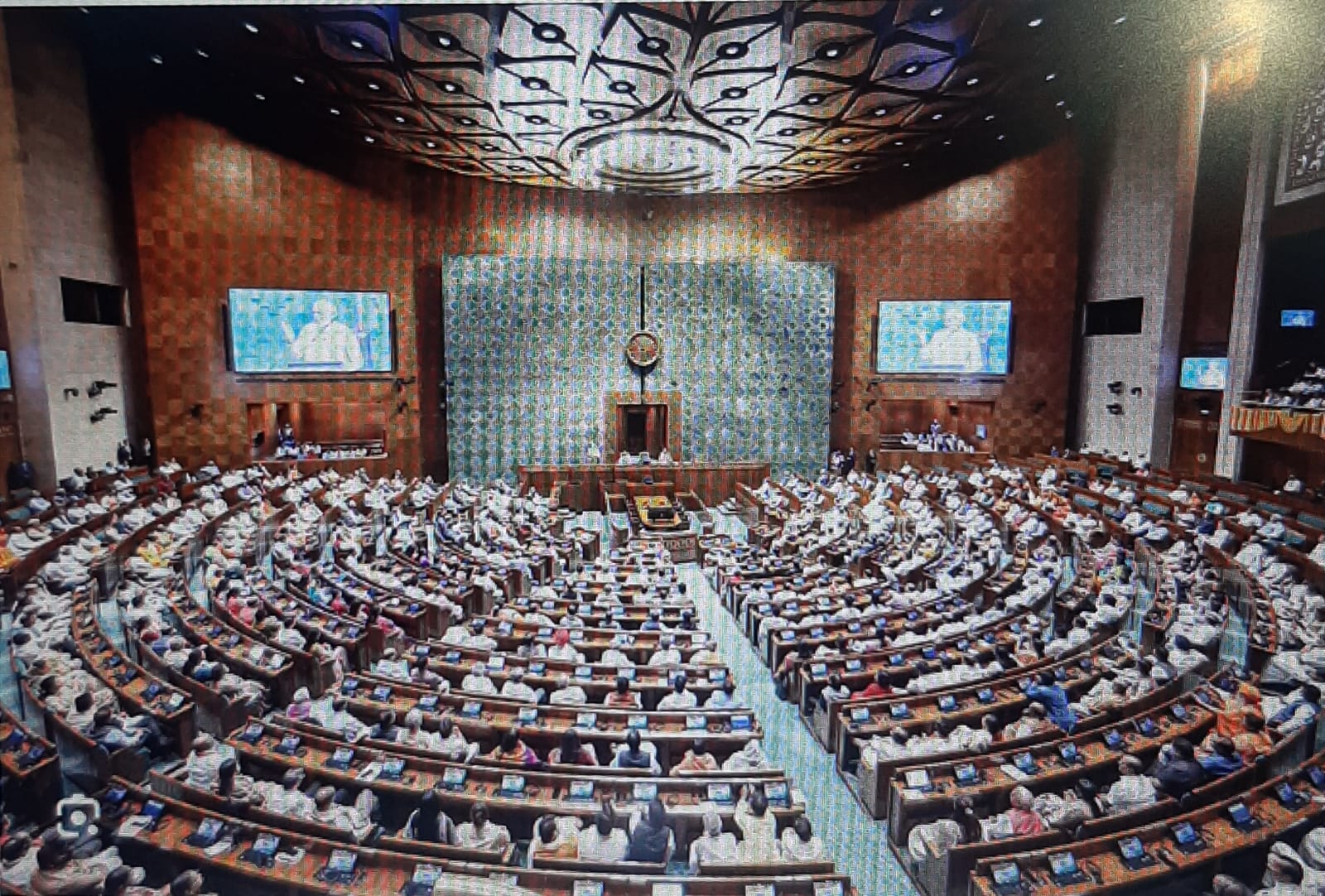
The recent data are harder to wave away. According to PRS Legislative Research, 71 per cent of bills went to committees in the 15th Lok Sabha; in the 17th it was 16 per cent. The 17th House averaged 55 sitting days a year, the lowest for a full term, against 71 in the 15th. Another analysis found only 24 per cent of listed questions were answered in 2019-24.
The government and presiding officers blame opposition disruption. In winter 2024, Lok Sabha worked at 54.5 per cent of scheduled time and Rajya Sabha at 40 per cent. They also note that the 18th Lok Sabha has sent nine bills to joint committees, against four each in the previous two, and that the Public Accounts Committee is again chaired by Congress’s K C Venugopal, honouring a convention dating to 1967.
The CAG’s output tells a similar story. Reports on Union accounts tabled in Parliament averaged 40 a year in 2014-18 and 22 a year in 2019-23, with 18 in 2023, according to the newspaper reports. Audit staff strength fell from 48,253 to 41,675 between 2013-14 and 2021-22. The reasons have not been officially explained, and audits still surface large findings, such as the Ayushman Bharat report on 7.49 lakh beneficiaries linked to one mobile number.
A 2023 law replaced the Chief Justice on the selection panel for election commissioners with a Union Cabinet minister, departing from the panel the Supreme Court had set in Anoop Baranwal. The Court refused a stay in 2024; the challenge is pending, and the bench has split on whether to refer it to a Constitution bench.
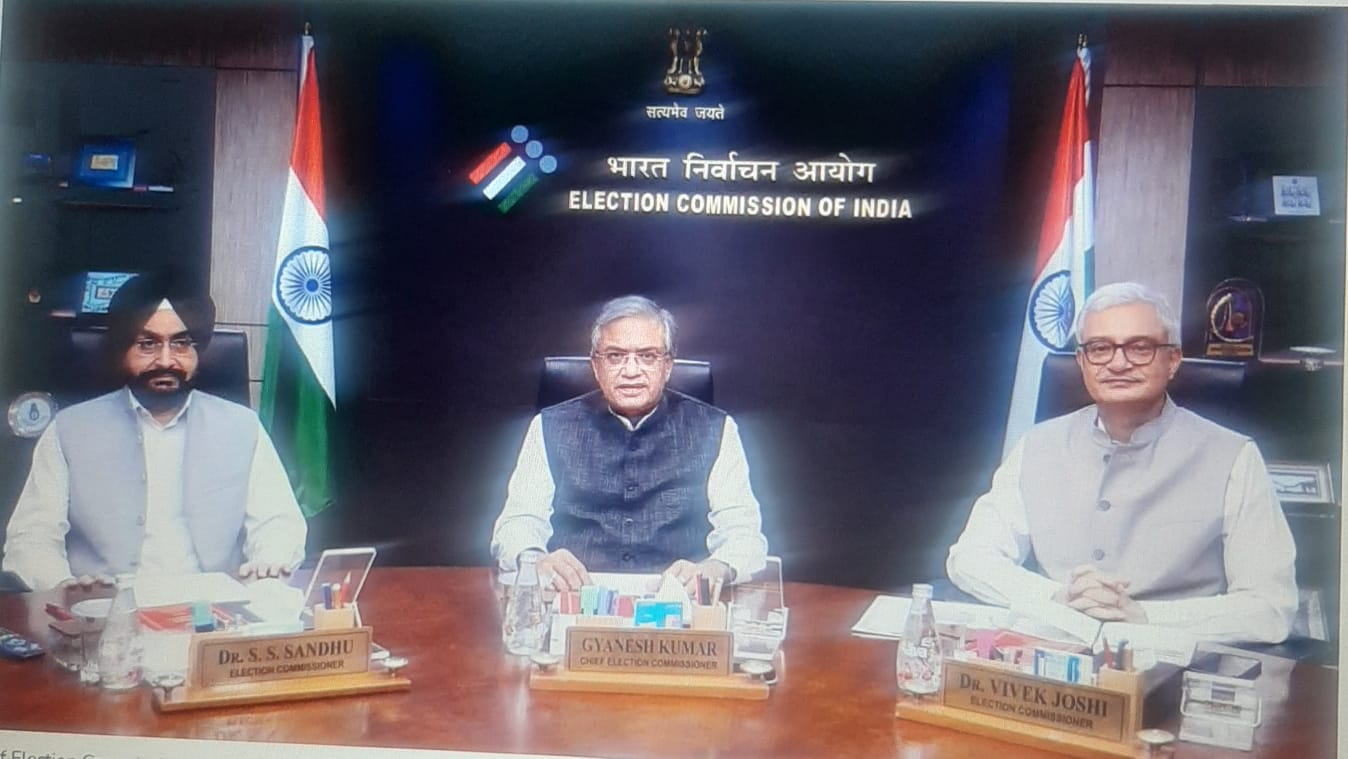
Meanwhile, the Special Intensive Revision has left over 130 million names off draft rolls, according to media reports citing Election Commission data. A major national newspaper reported that key decisions may lack the approval of two of the three commissioners. The Commission denies this, says its decisions were unanimous and legal, and points to 13 earlier intensive revisions. The opposition rallied in October for the Chief Election Commissioner’s removal.
Public trust is visibly shaken. A 2025 Lokniti-CSDS survey of 3,054 adults in Delhi and five states found 28.6 per cent trusted the Commission to a great extent, and 53 per cent said it works under central pressure at least somewhat. High trust fell from 56 to 31 per cent in Uttar Pradesh and from 68 to 41 per cent in West Bengal. The survey is not national, and public sources show no comparable recent survey for the courts, the CAG or Parliament.
India’s courts carry 5.64 crore pending cases, the Law Minister told Rajya Sabha in August, including 95,936 in the Supreme Court. High Courts have 341 vacancies against 1,122 posts. The government says it appointed 72 Supreme Court and 1,156 High Court judges between May 2014 and November 2025. The Court itself struck down the NJAC in 2015, yet the collegium remains criticised as opaque. On the Justice Varma impeachment, many critics says the government wants to dismantle the collegium; the government sought cross-party support for the motion.
UPSC chairman Manoj Soni resigned in July 2024, nearly five years before his term ended, citing personal reasons. Opposition said he was nudged out; government sources denied any link to the Puja Khedkar row. A month later, the Centre had UPSC withdraw a lateral-entry advertisement. The Central Information Commission was left headless in September 2025 for the seventh time in 11 years, with eight of ten commissioner posts vacant and about 26,000 appeals pending.
The V-Dem Institute classes India an electoral autocracy and ranks it 105th of 179 on its liberal democracy index. Right-leaning critics call that a mischaracterisation, and competitive elections continue. An index is a signal, not a verdict. The fair reading is that institutional strain is measurable, decades old and cross-party, that several indicators have worsened lately, and that nearly every claim has a counter-argument.
The remedies are well known: committee review of bills by default, as in the UK; a legal minimum for sitting days; protected staffing and tabling deadlines for the CAG; a broader-based election commissioner panel and published deletion data; time-bound filling of judicial and commission vacancies; and transparent judicial appointments. Institutions rarely fall in a day. They are hollowed by vacancies, delays and bypassed scrutiny until the referee’s whistle stops carrying weight. Whether India will reverse it’s course, only future will tell.
(Vijay Shankar Pandey is former Secretary Government of India)