

Electoral integrity cannot be defended through political slogans alone. India needs transparent voter-list revisions, accountable institutions and a politics that treats corruption as an offence regardless of who commits it, writes former IAS officer V S Pandey.
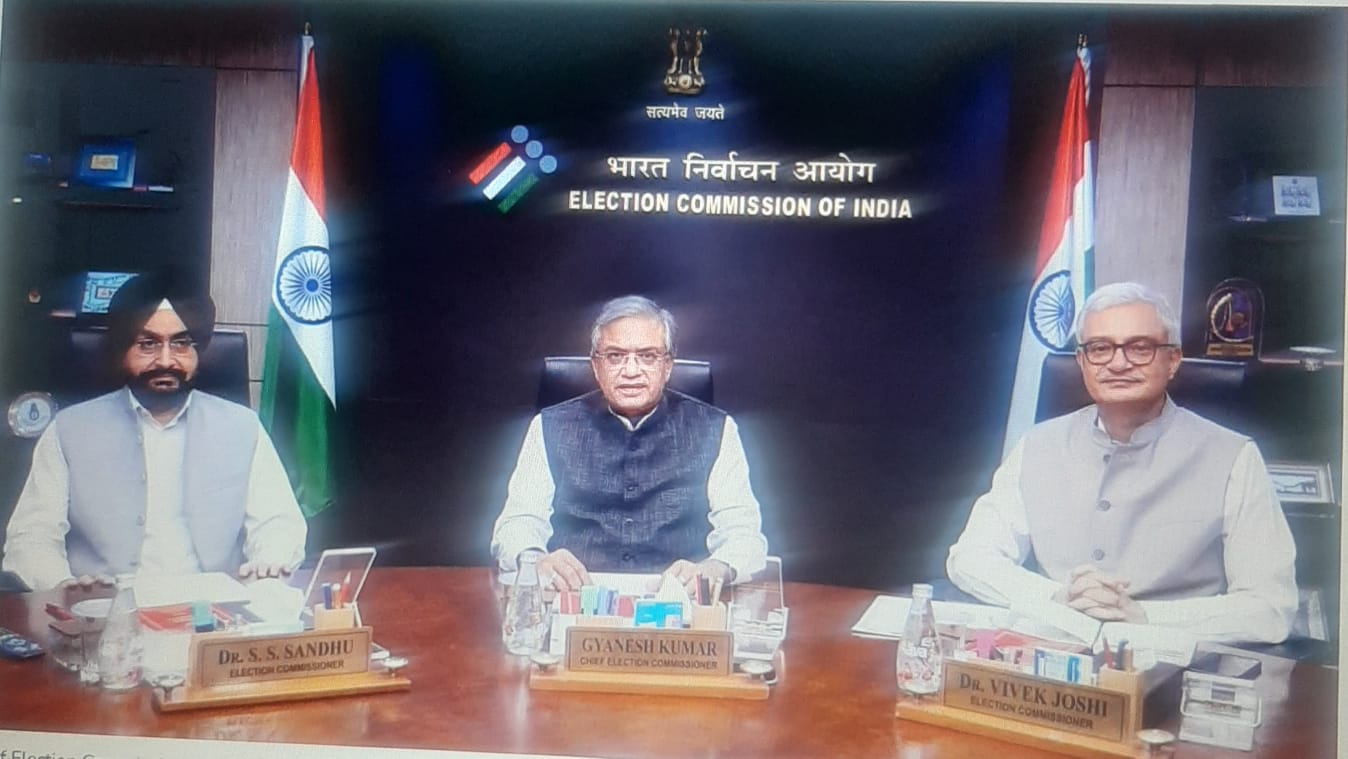
For the past few months, New Delhi has witnessed a curious spectacle in the name of public protest. Demonstrations demanding the resignation of one public official or another have become a recurring feature of political life. In June, the emergence of the so-called Cockroach movement, followed by the rapid mobilisation of supporters, substantial organisational resources and a high-profile campaign against the Union Education Minister over the NEET-UG paper leak, surprised many observers. The Education Minister eventually resigned in July. Now, the demand for the resignation of the Chief Election Commissioner has become the rallying cry of protests over alleged vote theft.
The question is not whether citizens have the right to protest. They unquestionably do. Nor should the government be insulated from public criticism. The more important question is whether a campaign conducted under the banner of public interest necessarily addresses the underlying problem, or whether the politics of resignation merely provides a dramatic substitute for institutional reform.
The controversy surrounding the Special Intensive Revision (SIR) of electoral rolls deserves serious examination. The integrity of elections is fundamental to representative democracy. If eligible citizens are deprived of their voting rights through administrative errors, arbitrary deletions or deliberate manipulation, the consequences are grave. Equally, the removal of duplicate, deceased or otherwise ineligible entries is necessary to maintain accurate electoral rolls. The challenge is to accomplish the latter without compromising the former.
The first responsibility is to establish the facts: Under India’s electoral framework, the Election Commission exercises constitutional authority over the preparation and revision of electoral rolls. The Representation of the People Act, 1950, and the Registration of Electors Rules, 1960, provide the statutory framework. Rule 25 of the 1960 Rules permits intensive revision, under which electoral rolls are prepared afresh in the manner prescribed for their initial preparation.
The practical responsibility for electoral administration, however, extends through a hierarchy of state and district officials, including electoral registration officers and booth-level functionaries. District election authorities and state chief electoral officers play important roles in supervising the process. This administrative structure which works under the direct control and supervision of concerned state governments , must remain accountable, accessible and responsive to citizens.
The increasing use of computerised systems and centralised data processing raises legitimate questions about transparency and responsibility. If decisions affecting individual voter registration are effectively concentrated in technological systems or centralised administrative processes, citizens must be able to discover why their names have been omitted, challenge incorrect decisions and obtain timely remedies. Technology should improve accuracy and efficiency, not make public administration more opaque.
The Election Commission must therefore explain the methodology used for deletions, the safeguards against erroneous exclusions, the procedures for correcting mistakes and the mechanisms through which complaints are resolved. The number of names removed is not, by itself, proof of vote theft. Neither can a claim that deletions were undertaken to clean the rolls settle the matter. Independent verification, transparent records and accessible appeals are essential to establish what actually happened.
Administrative incompetence and deliberate electoral manipulation are different allegations: A second question follows: do irregularities in electoral rolls establish that vote theft was deliberately organised? The answer cannot be supplied by political rhetoric. Evidence must determine whether errors arose from inadequate preparation, flawed technology, insufficient verification, bureaucratic indifference or deliberate attempts to influence electoral outcomes.
If eligible voters have been wrongly excluded, the Election Commission must correct the records and identify those responsible. If evidence establishes intentional manipulation, the matter demands an independent investigation and appropriate legal consequences. If the problem is administrative incompetence, that too requires accountability and institutional correction.
The demand for the Chief Election Commissioner’s resignation may be a legitimate political demand, but resignation alone cannot establish the truth or repair defective electoral processes. Replacing an officeholder without identifying the cause of the failure risks allowing the same practices to continue under a different administration.
The proper test of accountability is whether the institution corrects its mistakes, protects citizens’ rights and prevents their recurrence.
This brings us to a larger and uncomfortable question: why do we expect an administrative system that frequently fails citizens in routine matters to perform flawlessly when preparing electoral rolls?
Corruption, favouritism, procedural violations and administrative indifference have troubled Indian public life for decades. Citizens in many parts of the country encounter delays, demands for recommendations and, in some instances, demands for bribes when seeking legitimate public services. Such experiences weaken confidence in government and erode respect for the rule of law.
It would be wrong, however, to assume that every administrative failure is necessarily an act of corruption. Errors can arise from inadequate staffing, poor training, defective procedures and unreasonable workloads. Yet these explanations cannot become excuses for persistent negligence. Electoral administration requires a particularly high standard of diligence because a mistake can deprive a citizen of a fundamental democratic opportunity.
The same principle applies to every public institution. A government that demands accuracy from citizens completing official forms must itself ensure that its records are accurate. An administration that insists on documentary proof from the public must provide clear reasons when it rejects that proof.
Why should one form of corruption be condemned while another is ignored? :Indian politics frequently treats allegations of wrongdoing as instruments of convenience. When a rival is accused, the demand is for immediate punishment; when allegations concern one’s own party or government, the response is often denial, deflection or demands for further proof.
This double standard damages public confidence. The rule of law cannot function on the principle that wrongdoing becomes acceptable when committed by a politically favoured person. Nor can the seriousness of an offence be determined by the identity of the accused.
All political parties that have held office at the Union or state level must be judged by the same standards of transparency, financial accountability and integrity. No party should be presumed guilty without evidence, but none should receive immunity because it claims to represent the public interest.
The distinction between major and minor wrongdoing can matter when determining punishment, but it cannot justify selective enforcement. A credible anti-corruption policy must investigate allegations impartially, protect due process and impose proportionate penalties when wrongdoing is established.
Political movements demanding accountability from the Election Commission should therefore also be willing to examine the conduct of their own organisations. The same applies to the ruling establishment. Defending democratic institutions requires more than denouncing opponents; it requires demonstrating a commitment to standards that apply equally to everyone.
India needs political reform, not merely a succession of resignations: The country’s political system cannot be cleansed by changing a few officeholders while leaving the incentives that sustain corruption untouched. Transparent political funding, stronger disclosure requirements, effective enforcement of anti-corruption laws, independent investigations and timely judicial proceedings are essential components of reform.
Electoral administration itself needs practical safeguards. Every deletion of an eligible voter’s name should be traceable to a lawful, documented decision. Citizens should receive accessible information about their registration status, adequate opportunities to respond to objections and simple procedures for appeal. District-level verification must be meaningful, while computerised systems should be subject to independent technical and procedural audits. The Election Commission should publish sufficiently detailed data to permit scrutiny without compromising personal information.
These measures would help distinguish genuine electoral fraud from administrative error and political exaggeration. They would also protect the Commission from unjustified accusations while making it answerable for demonstrable failures.
But institutional reform will remain incomplete unless political parties address their own organisational culture. A political system dependent on opaque funding, patronage, personality cults and the mobilisation of caste and religious identities has little incentive to prioritise public service over the acquisition and retention of power.
India needs a new politics in which integrity is a qualification for public office rather than a slogan used against opponents. Such politics must reject illicit money, intimidation, communal polarisation and caste-based divisions as instruments of electoral success. It must place public interest, constitutional values and competent administration above partisan advantage.
This is a demanding objective, and it cannot be achieved overnight. Nor should citizens conclude that every existing political institution or every politician is beyond redemption. Reform requires sustained public pressure, independent institutions and voters willing to judge all parties by consistent standards.
The present controversy offers an opportunity to begin that process. Allegations of vote theft must be investigated rigorously, wrongful exclusions must be corrected, and anyone found responsible for deliberate manipulation must face the law. At the same time, political parties must recognise that electoral integrity is only one part of a much wider crisis of public accountability.
India cannot build a prosperous and just society by selectively condemning dishonesty. The choice before its citizens is not simply between one political party and another, or between one resignation demand and the next. It is between a political culture that perpetuates institutional decay and one that places honesty, competence and public service at its centre.
The real test of the current agitation will not be how many resignations it secures. It will be whether it helps build a system in which no eligible citizen loses the right to vote, no public official escapes accountability, and no political party is permitted to treat corruption as acceptable when it serves its interests.
That is the standard by which a democracy must ultimately judge itself.
(Vijay Shankar Pandey is former Secretary Government of India)