

India cannot lay claim to being a land of technological marvels or indeed even of average merit in the 21st century. The marvels happen to be of a very different nature. Let us enumerate a few. Newly-built roads which cave in; develop serious flaws including common potholes, roads built exactly at right angles; parallel bridges meant to be connected which however are so misaligned that it turns out that they cannot be connected…. citizens getting electrocuted with unfailing regularity because of lethal wiring; the need to deploy human rat-miners to rescue workers stuck in erratically erected tunnels which proved hazardous…the list is endless. What does this tell us? That we are incapable of civil engineering, electrical engineering or indeed any kind of engineering even of a basic level which can serve the country reliably and well, writes Juthika Patankar a former civil servant.
Much discussion, outrage and mirth ensued over a recent public speech by a political leader who apparently had conflated the status of the revered Indian Institutes of Technology (IIT) with the perceptibly plebeian Industrial Training Institutes (ITI). The remarks certainly ought to occasion thought but not quite in the direction that they did.
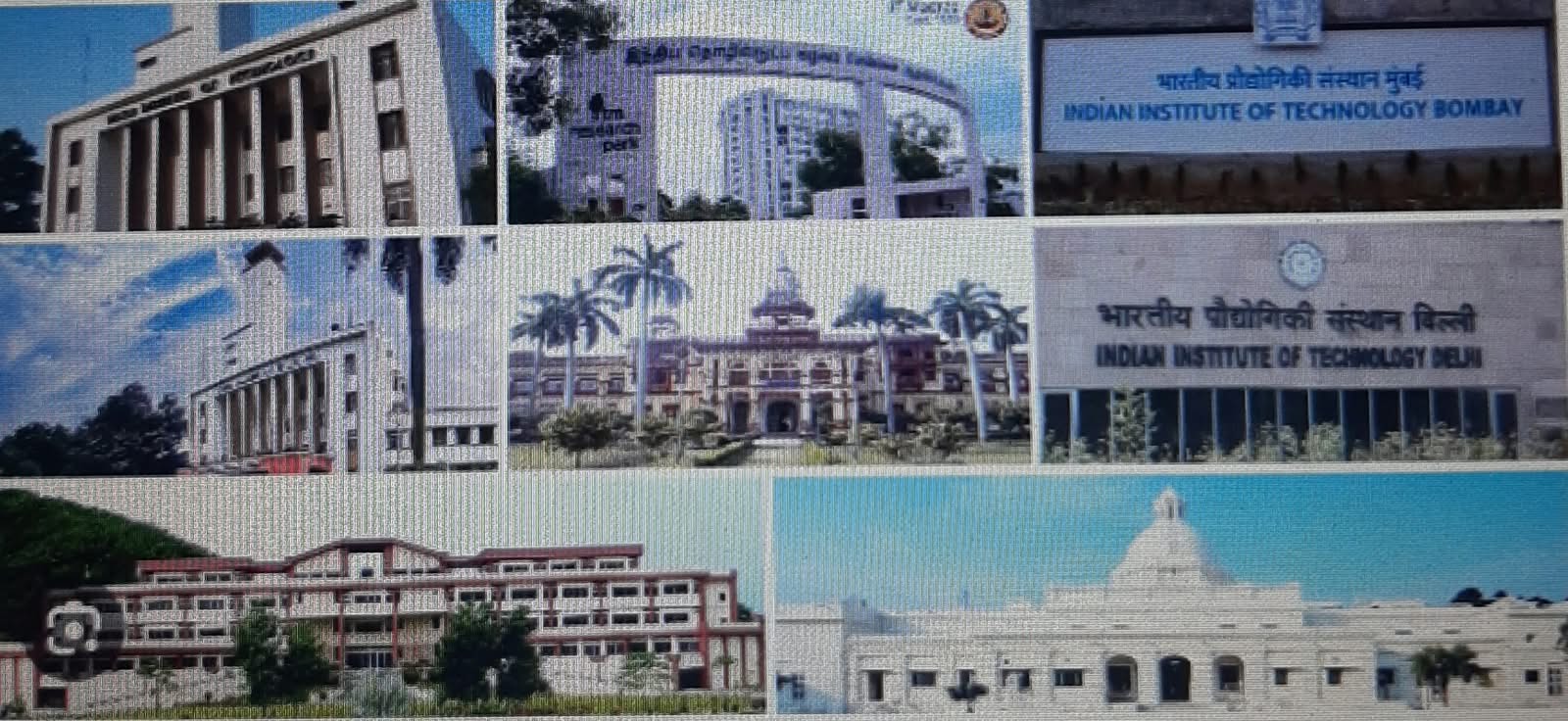
The IITs have been around for six decades now and given their vaunted excellence in technology studies, their students should have done India proud in ways that any citizen could see and understand. There are 23 IIT in India today and students face extraordinarily stiff competition to gain admission into these on merit. Their superiority in technology education is beyond question so we are given to understand, as most of their alumni go overseas (usually to the USA) for brilliant future careers and they apparently are also very much in demand there. In this sense, certainly India has reason to stand tall. But what about the situation within India?
India cannot lay claim to being a land of technological marvels or indeed even of average merit in the 21st century. The marvels happen to be of a very different nature. Let us enumerate a few. Newly-built roads which cave in; develop serious flaws including common potholes, roads built exactly at right angles; parallel bridges meant to be connected which however are so misaligned that it turns out that they cannot be connected; highways and bridges built without approach roads; bridges which collapse shortly after construction, city roads and drains which are flooded following rain; airport areas and hospital floors which go underwater and become unusable; high-rise buildings which available fire-tenders cannot reach; citizens getting electrocuted with unfailing regularity because of lethal wiring; the need to deploy human rat-miners to rescue workers stuck in erratically erected tunnels which proved hazardous…the list is endless. What does this tell us? That we are incapable of civil engineering, electrical engineering or indeed any kind of engineering even of a basic level which can serve the country reliably and well?
Should we not then be inevitably led to doubt the utility of IIT for India?
Now let us turn to ITIs. There are about 15000 ITI in India today, across states. 3000-plus are Government ITI. Their mandate is to provide long-term skill training in different, primarily, manufacturing-related trades. They too have existed for six decades. They were meant to meet industry’s demand for skilled labour.
ITIs are poorly staffed with many teaching posts remaining vacant. ITI trainers rarely attend refresher courses. They are seldom exposed to the newest trades. Trainees find their labs and teaching infrastructure inadequate and their courses outdated. Industry finds ITI-trained persons of little value.
Yet they also admit that even an ITI drop-out is better than an unskilled worker because he or she is still trainable.
ITI occupy an important place in our skill ecosystem and if they introduce more trained faculty and the newest market trades, they can powerfully improve India’s skilled sector.
Government of India has availed of World Bank loans to upgrade a certain number of ITI. That was a few years ago. The precise outcome of that does not appear to be in the public domain. Currently there is a PM-SETU (Pradhan Mantri Skilling and Employability Transformation through Upgraded ITIs), a five-year, ₹60,000 crore centrally-sponsored scheme, launched by the Ministry of Skill Development and Entrepreneurship on October 4, 2025, to modernize government Industrial Training Institutes (ITIs) through industry partnerships.
Obviously, Govt. of India is seized with the idea of making something of the ITI. The ITI are technically under the purview of State Governments but their role does not seem to be in the forefront.
However, Rs 20,000 crore is stated to be the contribution of the States in this five-year scheme. It is not immediately clear to the citizen why vacancies in government ITI could not be filled even without this grand scheme nor why errant private ITI could not be regulated better by Government so that improvement would have taken place anyway.
From the above then, to a lay citizen it would seem that in this present state of affairs neither the IIT nor the ITI are contributing significantly to India’s economic development.
What then should be done by way of technical education and technology skills to enable us Indian citizens to enjoy sturdy roads, reliable bridges et al?
True to form, perhaps the Govt. of India along with the states could appoint a high-level technical committee to consider the feasibility of setting up skill institutes in technology and engineering so that our shortcomings in these fields can be addressed? In modern jargon, could they be termed IIT-lite or Super-ITI? This will avoid diminishing the ‘brand equity’ of IIT, (of which we are so proud) as we never tire of counting the CEOs of Fortune 500 companies who have come from the IITs and the IIMs!
And they could be safeguarded from emigration to the US by investing them with an aura far lesser than the glamorous IIT? Thus, the IIT would remain at the top, the ITI would continue to struggle to prove useful and provide an excellent excuse for stupendously expensive improvement schemes and the ruling parties would be able to promise the people a brand-new scheme of Jan-IIT or Vande ITI, whichever they prefer, even if, in reality, it would remain old wine in a new bottle!
(Ms. Juthika Patankar is a visiting faculty in Gokhale Institute of Politics & Economics, a Honorary Fellow of Indian School of Political Economy, a member of Pune International Centre and a former civil servant. Views expressed are personal.)