

The government’s action is not an act of vendetta. It is an act of reclamation — of asserting, perhaps belatedly, that public land must serve public purposes. The law supports it. The facts support it. The larger national interest demands it, writes former IAS officer V.S.Pandey.
When the Land and Development Office (L&DO) issued its eviction order on May 22, 2026, directing the Delhi Gymkhana Club to vacate its 27.3-acre premises at 2, Safdarjung Road by June 5, the reaction from certain quarters was as predictable as it was revealing. Former bureaucrats took to social media. Retired generals penned agitated letters. Senior advocates were retained overnight. The entitled classes had circled their wagons around one of the most exclusive — and most publicly subsidised — clubs in India.
But lost in the din of elite outrage is a simpler, uncomfortable truth: the government is well within its rights, and the case for reclaiming this land is not merely legal — it is morally compelling.
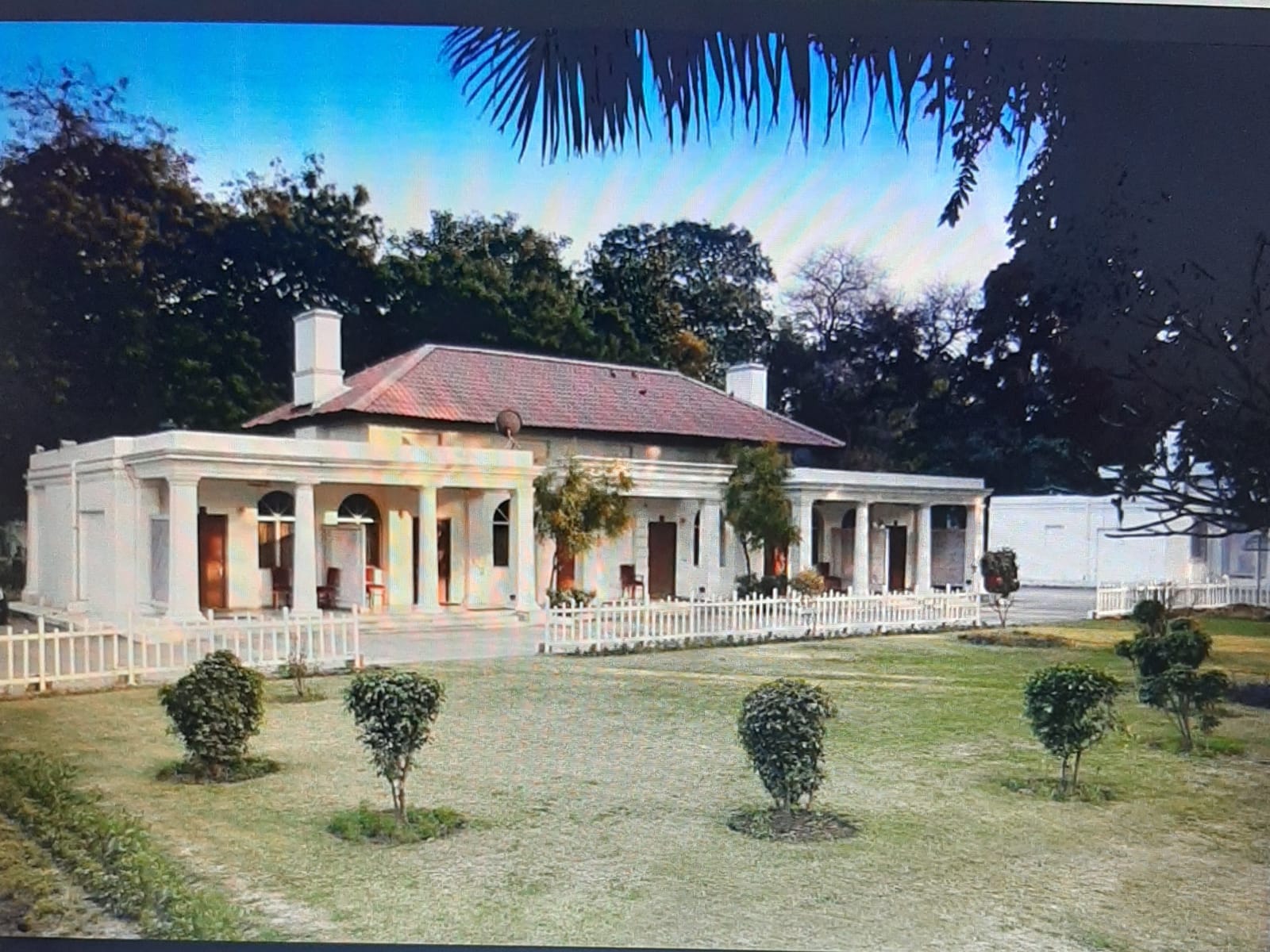
The Delhi Gymkhana Club traces its origins to 1913, when British colonial administrators founded the Imperial Delhi Gymkhana Club as a social retreat for officers of the Raj. In 1928, as New Delhi took shape as the new imperial capital, the club was allotted 27.3 acres of prime land in the heart of what would become independent India’s most strategic real estate — a stone’s throw from the Prime Minister’s residence on Lok Kalyan Marg and surrounded by the country’s most sensitive defence and governance infrastructure.
The land was granted on a lease. Not gifted. Not sold. Leased — with explicit conditions attached. The original lease deed contained Clause 4, which unambiguously reserves the lessor’s right to resume the land for public purpose. The government, invoking this clause, has stated that the premises are “critically required for the strengthening and securing of defence infrastructure and other vital public security purposes.” This is not bureaucratic overreach. This is a landlord invoking a right that has existed in black and white for nearly a century.
When members argue that a “perpetual lease” gives them eternal possession, they conveniently overlook that no lease — perpetual or otherwise — can override the sovereign’s right to reclaim land for public purpose when that right is explicitly written into the contract. Courts across India have consistently upheld this principle.
The eviction order did not descend from the sky. It is the culmination of years of documented misconduct, regulatory defiance, and of brazen impunity.
The story of violations at the Gymkhana Club reads like a manual on how not to honour a public lease. As far back as 2014, the Delhi Pollution Control Committee ordered the club’s closure for using unauthorised bore wells and violating environmental norms. The National Green Tribunal stepped in and imposed a fine. The club paid — and carried on.
More damning were the financial irregularities uncovered after complaints were filed in 2017 by twelve members, including two insiders. Government inspections revealed that even though the land was leased specifically for sports activities, the club spent a mere 2.77 percent of its total expenditure on sports between 2014 and the inspection period. The rest went into lavish food and beverage facilities, social events, and the upkeep of a lifestyle sanctuary for a few thousand privileged Indians.
The Ministry of Corporate Affairs took cognisance and approached the National Company Law Tribunal (NCLT). In April 2022, after a 149-page order, the NCLT found “sufficient material” to establish mismanagement of the club’s affairs and allowed the government to nominate 15 directors to its general committee. In October 2024, the National Company Law Appellate Tribunal (NCLAT) upheld the central government’s intervention, setting a March 2025 deadline for remedial restructuring. The club failed to put its house in order.
Then came the ground rent crisis. For over nine decades, the club had been paying an annual rent of just Rs 409.50 — Rs 15 per acre — for 27.3 acres of some of the most expensive land in Asia. When the L&DO finally issued a rent revision in December 2023, the revised annual rent rose to over Rs 4.10 crore. The club dragged its feet. The government wrote three letters over nine months — in September 2025, March 2026, and April 2026 — asking the club to clear dues, furnish subletting details relating to its tenancy with Punjab National Bank, and comply with its obligations. The club ignored all three. By April 2026, the total outstanding ground rent, with interest and penalties, had climbed to Rs 47.58 crore — and subletting charges were yet to be calculated due to the club’s non-cooperation.
This is not a club being victimised. This is an elite club that has systematically abused its lease, refused to pay its dues, defied regulatory orders, and treated public land as private inheritance.
Let us set aside the legal arguments for a moment and ask a simple question: should 27.3 acres of premium public land in the national capital — land worth thousands of crores by any conservative market estimate — remain the exclusive playground of a few privileged thousand members with waiting lists stretching thirty to forty years?
The Delhi Gymkhana Club is not a public park. It is not a hospital, a school, or a housing colony for the urban poor. It is a members-only establishment where entry requires either extraordinary social connections or the patience to wait a lifetime on a waiting list. The colonial-era architecture, the swimming pools, the restaurants, the rolling lawns — all of this sits on land that belongs to the Indian state, maintained at a rent that is a rounding error compared to its actual value.
India is a country where millions lack access to adequate housing, where public sports infrastructure is chronically underfunded, where children play cricket on crumbling municipal grounds. The argument that one private club — however historically distinguished — should hold 27.3 acres of sovereign land at a subsidised rate in perpetuity, serving a few thousand crorepati members while public interest waits interminably- is an argument that belongs to another century. Indeed, it belongs to 1913.
It would be unfair to entirely dismiss the concerns of genuine members — people who paid substantial fees in good faith, some of whom have been associated with the club for decades. Their grievance is not without sympathy. But it must be directed at their own club’s management, which squandered decades of goodwill through financial irregularities, ignored government notices, failed to invest in the sports activities the lease mandated, and ultimately brought this crisis upon themselves.
Otherwise also, these crorepati members belonging to one of the most elite group of our country do have sufficient resources collectively to purchase an alternate piece of land ,befitting their taste and aura, re-establish their own gymkhana club, and continue to enjoy the services of the 600 strong trained workforce till eternity. Who is stopping them?
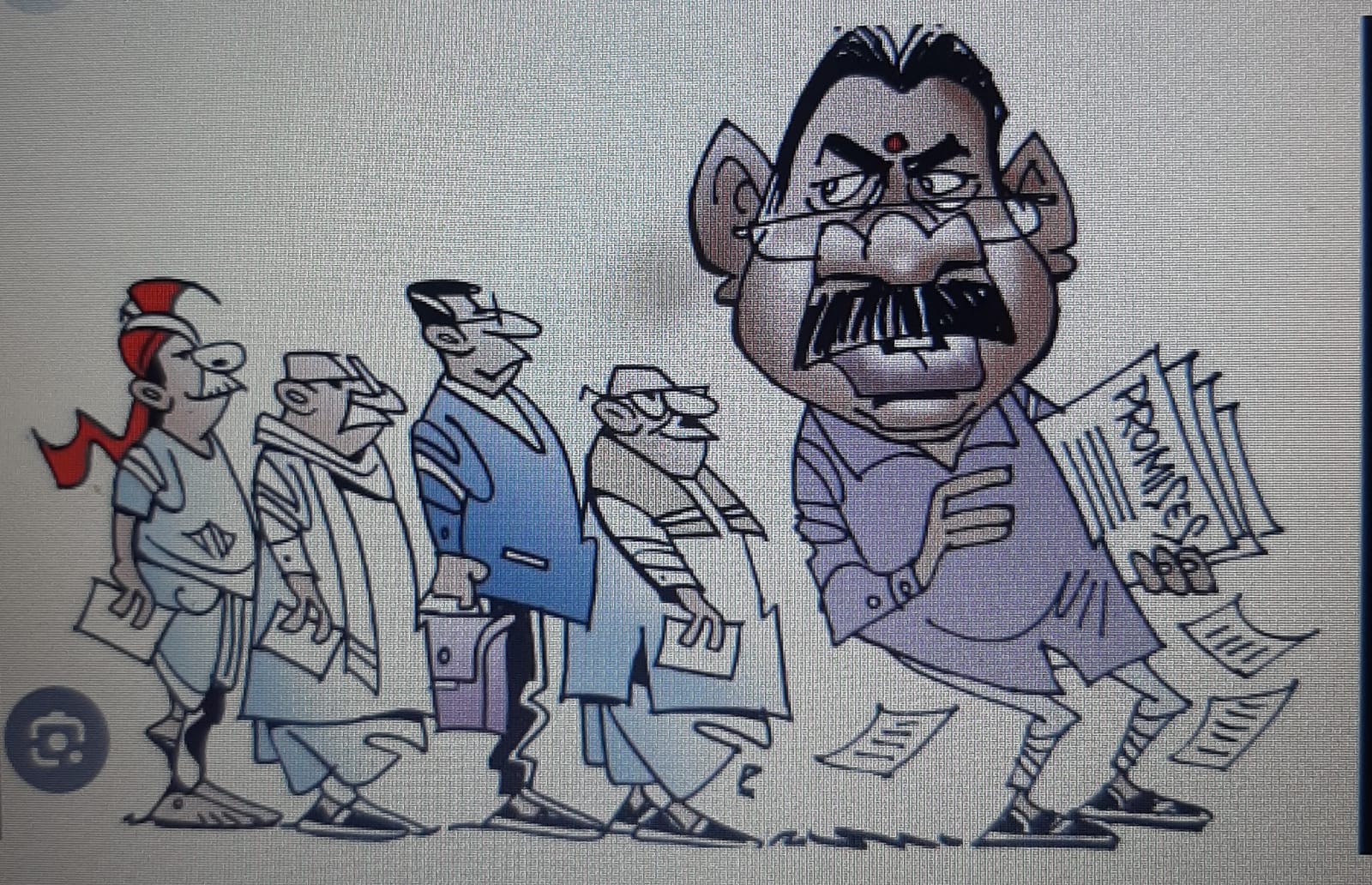
The Delhi Gymkhana Club controversy is, at its core, a story about two Indias. One India, small in number but vast in influence, that has occupied the choicest parcels of public land since colonial times, paying colonial-era rents, insulated by social connections from the regulations that govern ordinary citizens. And another India — the 1.4 billion — for whose benefit this land ultimately exists.
The government’s action is not an act of vendetta. It is an act of reclamation — of asserting, perhaps belatedly, that public land must serve public purposes. The law supports it. The facts support it. The larger national interest demands it.
Those outraged by the eviction notice would do well to ask themselves why they are more comfortable with 27.3 acres of the national capital being held by a club for a select few than with that same land serving the defence, security, and public needs of a sovereign democratic republic. The answer, when it comes, will expose the priorities of our elite more than any government order ever will.
(Vijay Shankar Pandey is former Secretary Government of India)