

Most Indians migrate due to frustration with systemic failures at home—limited high-quality jobs, bureaucratic inertia, corruption, weak rule of law, and inadequate public services. However, expecting foreign nations to compensate for domestic governance failures raises ethical and political questions, writes former IAS officer V.S.Pandey
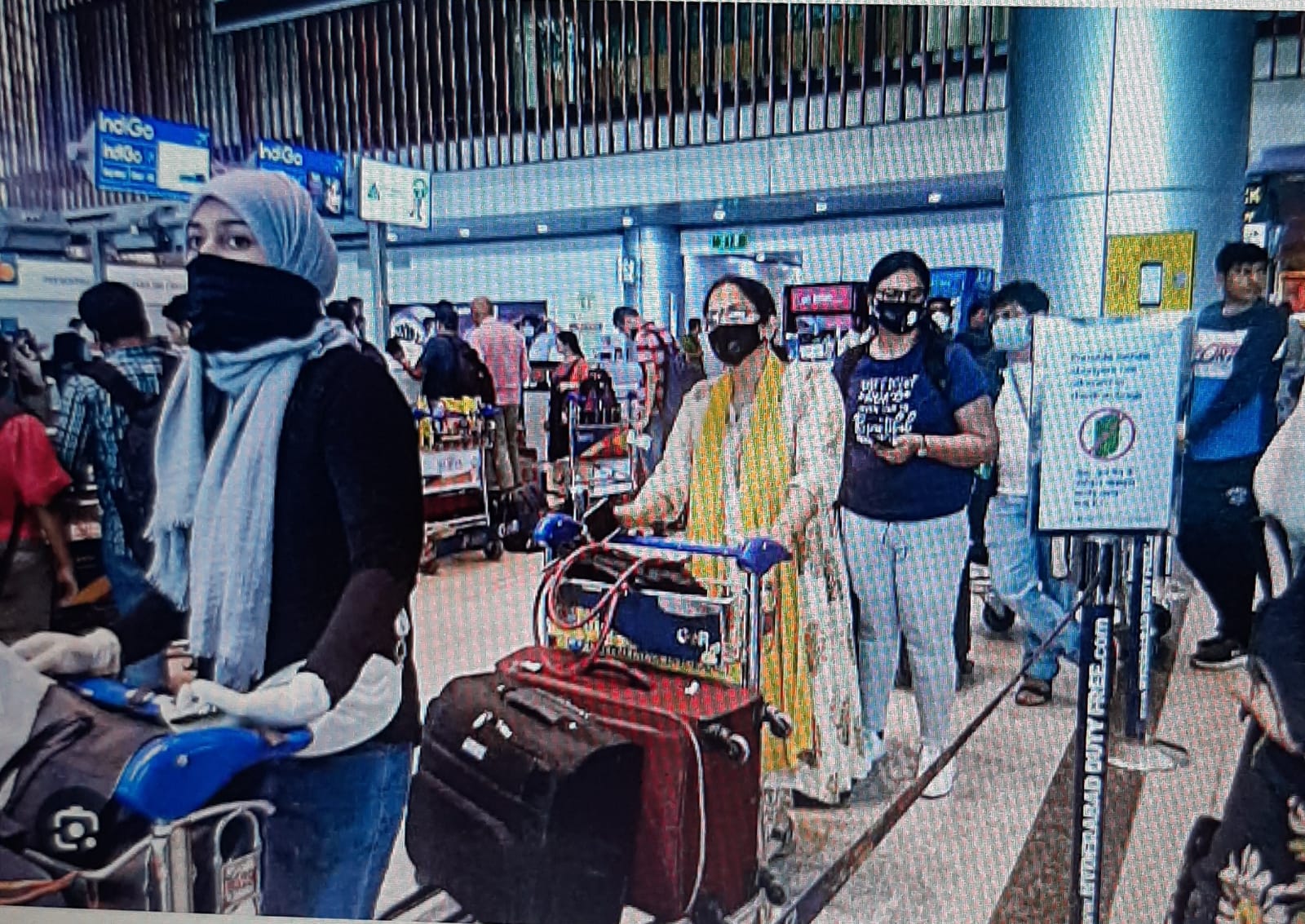
Trump’s aggressive anti-immigration stance coupled with the MAGA slogan has soured Indian’s American dream . The US is constantly issuing fresh visa guidelines aggravating apprehensions of those already in the USA and causing grave disappointment for the newly minted American dreamers. In recent decades, millions of Indians have migrated to countries such as the United States, Canada, the United Kingdom, and Australia in pursuit of better economic opportunities, higher standards of living, and professional recognition. This phenomenon has given rise to a fundamental question: Why should another nation be expected to fulfil the “Indian dream”? Why should nations like the United States open their doors to talent, labour, and ambition from abroad, while India itself struggles to provide similar opportunities to its own citizens? At the heart of this debate lies a tension between individual aspiration and collective national responsibility.
The “Indian dream” pursued overseas often mirrors the American Dream: merit-based advancement, institutional fairness, economic mobility, and dignity of labour. Most Indians migrate due to frustration with systemic failures at home—limited high-quality jobs, bureaucratic inertia, corruption, weak rule of law, and inadequate public services. However, expecting foreign nations to compensate for domestic governance failures raises ethical and political questions.

No country is morally obliged to absorb another country’s surplus labour or unrealised talent. Immigration policies are designed primarily to serve the national interest of the host country, not humanitarian ideals or foreign aspirations. When the United States admits Indian engineers, doctors, or researchers, it does so because they contribute to American productivity, innovation, and global competitiveness—not because it bears responsibility for India’s developmental challenges. Indians themselves must take primary responsibility for nation-building rather than seeking individual escape routes. Nations are not built by the departure of their most capable citizens but by their participation in reforming institutions, improving governance, and strengthening civic culture.
Mass emigration of skilled professionals—often termed “brain drain”—weakens India in several ways. Public resources are spent on educating doctors, engineers, and scientists who then contribute their productive years to foreign economies. This represents a silent subsidy from Indian taxpayers to developed nations. Moreover, the departure of capable citizens reduces pressure on domestic systems to reform. When the most dissatisfied leave rather than demand accountability, mediocrity becomes entrenched. Historically, countries that transformed themselves—Japan after World War II, South Korea in the late twentieth century, or China in recent decades—did so not by exporting their talent permanently, but by retaining, mobilising, and empowering it domestically.
Naturally migration is a rational response to unequal opportunities in a globalised world. Every individual has the right to maximise their potential, ensure security for their family, and work in environments that reward merit. Expecting individuals to sacrifice their personal aspirations indefinitely for abstract national goals risks turning patriotism into coercion. The problem arises when migration becomes a one-way exit without engagement. A nation cannot rely solely on emotional appeals to retain talent; it must earn loyalty through fair institutions, predictable policies, and dignity in everyday life. Until Indian systems provide comparable professional ecosystems, moral arguments alone will not suffice to stop outward migration.
It is argued that migrants prosper at the expense of citizens of host countries by taking jobs, depressing wages, or straining public services. This claim, however, is only partially true. High-skilled Indian migrants in countries like the United States often fill gaps in STEM fields, healthcare, and academia—sectors where domestic supply is insufficient. Numerous studies show that skilled immigration tends to expand the economic pie, creating more jobs than it displaces. At the same time, host countries are justified in regulating migration to protect their citizens’ interests. Immigration is not charity; it is a calculated policy choice. When political backlash emerges in these countries, it reflects domestic anxieties rather than moral failure of migrants.
While remittances from overseas Indians contribute significantly to India’s foreign exchange reserves, remittances cannot substitute for institutional capacity, innovation ecosystems, or civic leadership. A country does not become great merely by exporting people who succeed elsewhere. True development requires functioning courts, honest administration, quality education, and social trust—none of which can be outsourced. Moreover, dependence on migration as a safety valve masks domestic unemployment and underemployment. Instead of addressing structural issues—such as rigid labour laws, poor urban planning, weak research funding, and politicised institutions—migration provides temporary relief without long-term solutions.
The responsibility to reverse excessive outward migration lies primarily with the Indian state. Citizens cannot be expected to build a nation when systems actively penalise honesty, efficiency, and excellence. Predictable governance, swift justice, professional autonomy, and respect for individual dignity are not luxuries—they are prerequisites for national retention of talent. If India wishes its citizens to fulfil their dreams at home, it must create conditions where dreams are possible without humungous struggles. This includes reforming education, decentralising power, reducing bureaucratic discretion, and restoring trust between the state and citizens.
The choice is not between migration and nationalism, but between detachment and engagement. Indians abroad need not be viewed as deserters; they can be bridges—of investment, knowledge, and global influence. Equally, India must stop treating migration as an escape hatch and instead as an indicator of what is broken at home. No country, including the United States, owes it to fulfil the Indian dream. That responsibility rests squarely with India and its people. Migration may offer individual successes, but national transformation requires collective effort, institutional reform, and moral courage to fix what is difficult rather than fleeing from it.
Ultimately, nations rise when their citizens choose to invest their talents at home because the system rewards effort, not because they are guilt-tripped into staying. Until India becomes such an aspirational place, migration will continue. Expecting other countries to carry the burden of Indian aspirations is neither fair nor sustainable. The Indian dream must be built in India—by Indians—through reform, responsibility, and renewed faith in self-governance.
(Vijay Shankar Pandey is former Secretary Government of India)