

In most states, the election strategy of different political parties in local government elections mimics their strategy for Assembly and even Lok Sabha elections. The focus is on organizing rallies of big leaders such as the Chief Minister and the Ministers with huge expenditure on the pandals, decoration of the dais, seating and transport arrangements for the party workers and voters, writes former IAS officer Sunil Kumar
In the second part of the article, attention would be focused on the campaign strategy adopted by the political parties and the manner in which the election manifestos were prepared and released in Kerala and Maharashtra local government elections.
Election Strategy
In most states, the election strategy of different political parties in local government elections mimics their strategy for Assembly and even Lok Sabha elections. The focus is on organizing rallies of big leaders such as the Chief Minister and the Ministers with huge expenditure on the pandals, decoration of the dais, seating and transport arrangements for the party workers and voters. In case of BJP, their national leaders do not shy away from campaigning for the party candidates even in urban local government elections unlike most other parties. Candidates routinely organized procession of supporters and workers, dressed in their finery, holding placards and banners with accompanying bands. Some candidates, along with their family members, moved from door to door in small groups in their effort to establish direct contact with the voters. Party flags and hoardings were placed at strategic corners in the constituency. Mobile publicity vans were also extensively used by the candidates. Use of social media, organizing press conferences were also resorted to, at least, by the candidates of major political parties. The air of festivity was visible in the local government elections. All the major political parties in Maharashtra, viz. the BJP, the Shiv Sena (Shinde), the NCP (AP), the Shiv Sena (UBT), Maharashtra Navnirman Sena (MNS), the NCP (SP), and the Indian National Congress (INC) seemed to follow the aforementioned set template in Maharashtra.
The campaign strategy deployed by the two major political formations – the Left Democratic Front (LDF) and the United Democratic Front (UDF) – in the local government elections in Kerala has a different story to tell. After the announcement of election schedule, what happened in the cities, towns and Panchayats of Kerala, was not much different from what we saw in Maharashtra or what happens in any other state. Party flags, hoardings, wall writings, mobile publicity vans, extensive use of social media, small public meetings, road shows, door to door campaigning, press conferences, etc. were all used in Kerala as well to reach out to the voters as part of electioneering. But the most striking thing was what happened in the pre-election phase, say about six months prior to the polling date in December 2025.
The ruling alliance (LDF) was strongly entrenched in power, both in the state as well as the local governments. In the 2021 Assembly elections, the LDF had broken the tradition since 1977 of alternating governments by successfully coming to power for the second consecutive term. However, in the local government elections, the UDF deployed a different electoral strategy and that clicked with the electorate.
As the first step, the UDF decided to focus on preparation of the report card of the local governments. About six months prior to the elections, they trained a core team of 141 leaders drawn from all over the state (master trainers) who, in turn, trained nearly 7000 local leaders in each urban and rural local government. This training was on how to prepare a ‘charge sheet’ against the LDF led local governments and a ‘fact sheet’ of UDF led local governments based on data culled out from careful scrutiny of audit reports, development reports, implementation register and completion reports.
The second stage involved the actual preparation of the reports. The reports highlighting the failure of the LDF led local governments prominently cited instances of wastage of money during implementation, list of incomplete works (ostensibly due to inefficiency of the committee), and works undertaken without the consent of Gram Sabha. List of back door appointments, corruption chages levelled in the Gram Sabha and poor expenditure of local government also found space in the charge sheet. On the other hand, for UDF led local governments, the fact sheets highlighted the achievements in a ‘believable’ manner suitably buttressed with facts and figures.
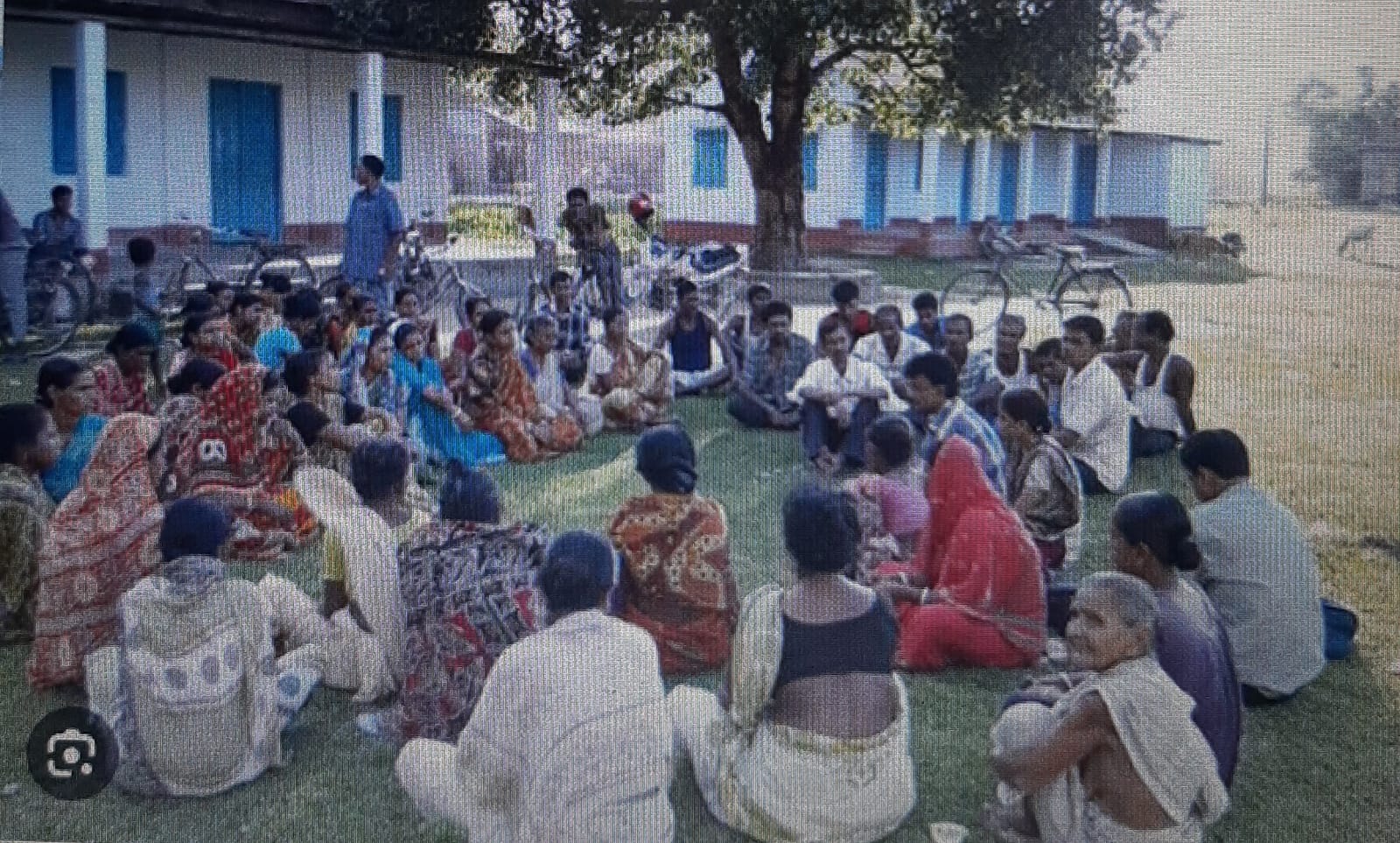
In the third stage, well publicised ‘development seminars’ were organized at each and every local government level. All efforts were made by the party to involve as many people as possible. Apart from presentation of the charge sheet/ fact sheet for approval, effort was made to elicit suggestions from the public for inclusion in the party’s proposed five year perspective plan for the local government.
In the fourth stage, this exercise was undertaken in all 21,000 wards (urban & rural) of all local governments in Kerala. Based on inputs received, the state, local government and ward specific election manifestos were prepared.
Even in selection of candidates, this time the UDF left the choice of appropriate candidate selection to the people of the ward without any interference from above. The sole condition was that the selection should be unanimous. This was at complete variance with the ‘high command’ culture that one witnesses in the functioning of political parties especially in selection of party candidates.
During electioneering, intensive door to door campaigning was undertaken where each voter was handed over copies of the charge sheet/fact sheet and party’s state, local government and ward specific election manifesto. Extensive use of social media, circulation of small reels depicting corruption charges through story telling method, wall writings, street plays, mike announcements and neighbourhood meetings were widely used and to good effect. The results (to be analysed in detail in the third part) suggest that party workers of LDF alliance struggled to effectively counter the ‘facts’ reproduced in the charge sheet and fact sheet.
Preparation of Election Manifesto
This cycle of local government elections in Maharashtra and Kerala witnessed preparation and release of election manifestos by the major contesting political parties. In Kerala the manifestos were prepared with greater seriousness from ward to local government to state level by both competing party alliances (LDF & UDF) and covered both rural and urban local governments. However, in Maharashtra, the major parties such as the Shiv Sena (UBT), MNS & NCP (SP) alliance, the Mahayuti (BJP, Shiv Sena (Shinde) & RPI-A), the Congress & Vanchit Bahujan Agadhi (INC & VBA) and Aam Aadmi Party (AAP) released city specific election manifesto. However, no ward specific election manifestos were prepared and officially released by any political party or party alliance. No party in Maharashtra came out with state level election manifesto either. However, certain citizen groups came out with ward specific election manifesto in Pune while one is not aware of any such election manifesto by any citizen group in Kerala or anywhere else in the country.
In this article we will examine the promises made in the election manifestos of four major political alliances for Mumbai local government elections[i]. The Shiv Sena (UBT), MNS & NCP (SP) alliance pledged to construct one lakh affordable homes and ensure no municipal land was given to private developers. The promised ‘freebies’ included ₹1,500/month for domestic workers; free electricity (100 units), property tax waivers for homes up to 700 sq ft and ‘Masaheb Kitchens’ serving meals at ₹10 per meal. It also promised inter alia extensive education reforms including multi-board schools and digital learning; 100% sewer coverage, new electric buses with affordable fares, and restoring Mumbai’s status as a global financial hub. Not to be left behind, the AAP’s ‘Kejriwalchi Guarantee’ for Mumbai included free 24×7 water supply, zero electricity bills up to 200 units, establishing 1,000 Mohalla Clinics for free primary healthcare, and revolutionizing BMC schools with modern facilities. It also promised ‘free bus travel’ for women and financial support, alongside a commitment to corruption-free governance.
The Mahayuti (BJP, Shiv Sena, and RPI-A) promised to make ‘Mumbai Clean, Green, Safe, Fast, Sustainable, Prosperous, and Happy’. It emphasized ‘world-class’ infrastructure (undefined), 24×7 water supply, AI-powered education and healthcare, and robust women’s empowerment through financial support and safety initiatives. It also promised 50 percent concession to women travellers on BEST and interest free loan of upto Rs. 5 lakh to women to make them self reliant and set up small industries. On the other hand, the Congress & Vanchit Bahujan Agadhi (INC & VBA) promised to tackle Mumbai’s worsening air pollution with stronger controls and better urban planning, introduce universal health cards to enable residents to access free medicines and public healthcare, and reform the BMC to make it transparent and corruption-free, while significantly improving everyday civic services like roads, water supply, sanitation, and overall quality of life for Mumbaikars. Similar promises were made for Pune. However, it must be remenbered that political parties had stitched city specific alliances and in Pune & Pimpri-Chinchwad, both factions of the NCP contested the elections together unlike in Mumbai.
The focus of the ruling Mahayuti was on extension and expansion of infrastructure especially roads, metros etc. but not much was said regarding the delivery of basic civic services. The Shiv Sena (UBT), MNS & NCP (SP) alliance and AAP led the way in promising ‘freebies’ although the Mahayuti too tried to lure women voters. This prompted Dr. Ajit Ranade to write that “Cash transfers fundamentally alter the relationship between the state and the voter. They create a one-way flow — the government gives, the citizen receives. Gratitude begins to substitute accountability.[ii]”
In Pune, a citizen group called the Deccan Gymkhana Parisar Samiti (DGPS) prepared and released a citizen’s manifesto for Ward 12 & 29 wherein they categorically asserted that as tax paying residents they wanted basic civic amenities, planned development and transparent local governance. Based on citizens response, they identified the top priorities as an end to water scarcity and dependency on water tankers, traffic congestion, broken roads due to continuous digging, unsustainable redevelopment and unchecked commercialization of residential areas, reduction in air, noise and dust pollution, improved and safe footpaths for pedestrians, better solid waste and sewage management, street lighting and protection of hills, trees and amenity spaces. Citizens wanted basic services more than freebies. They demanded transparency and accountability in local governance through publication of annual audit reports for their wards and quarterly public review meetings and treating citizens as stakeholders rather than just voters. Unforunately, these were not the top priorities for the political parties and did not find adequate importance in their election manifestos.
The Praja Foundation had earlier released a report captioned ‘Highlights of Mumbai’s Party-wise Manifesto (2017-22) Analysis & Targets to Set for 2022-27’ with a view to get the voters to reflect on the promises made by political parties and assess their performance thereto.
As mentioned earlier, in Kerala, the election manifestos were prepared and released for every ward, local government and even for the state by both major political formations in the state: the LDF and the UDF.
The LDF manifesto focused on strengthening decentralized governance, expanding welfare programs and enchancing local economic growth and promised to ensure development with people’s participation. Primary focus was on the issue of governance and decentralization with greater devolution of funds, enhanced decentralisation and greater autonomy. Increased public participation in budgeting, development planning and monitoring was also advocated. Universal access to welfare programmes, improved health and sanitation facilities with regularization and fair wages for ASHA, Kudumbashree and sanitation workers, launching local employment missions, building climate resilience at local government level, setting up digital schools and smart and green urban infrastructures received due attention.
As for the UDF election manifesto, it highlighted a commitment to addressing critical local issues such as housing shortages by constructing 5 lakh houses in five years and effectively address waste management issues, increasing the allowances of ASHA workers and undertaking poverty alleviation through schemes like ‘Ashraya 2.0’ and the promise of reviving decentralization. It promised that wards in local governments would get a specified portion of untied funds for preparing community plans and a certain portion of State’s Own Tax Revenue would be devolved to the local governments for avoiding the common problem of ‘plan cut’ at the end of each financial year. Inclusion of ‘stray dog-free Kerala’ in the UDF manifesto indicate their close citizen connect as it looked at the issue from the point of view of the citizen. It also touched upon increasing women component plan, specific plans for youth and fishermen, sub-plan for agriculture and institutionalising Kudumbashree. Consequently despite not talking of devolution, they created the impression that decentralisation would be strengthened.
A perusal of the UDF election manifesto of one Chapparappadavu Gram Panchayat in Kannur district reveals that strengthening decentralization through empowering the Gram Sabha, constituion of Gram Sabha for women, youth, elderly and children and setting up a Sevagram kendra in every ward as an office of the Gram Sabha figured prominently. Again it shows how highly the issue of governance, accountability and decentralization was rated by both political formations in Kerala which seemed to be totally missing from the manifestos of political parties in Maharashtra.
Conclusion
Thus, it is clearly evident that the election strategy deployed in Kerala and Maharashtra were totally different. In Kerala the elections were held on time and preparatory work had begun six months prior to the actual elections where political workers were working at every level sifting through reports and voluminous data, collecting evidence and preparing reports in the form of charge sheets, where opponents were in power, and fact sheet of their achievements where they were seeking re-election. This strategy of UDF stumped the LDF as all the charges were based on evidence and could not be conclusively refuted.
On the other hand, in Maharashtra, there was no certainty as to when the much delayed local government elections would take place and ultimately it took the intervention of the Supreme Court to nudge the SEC and the state government into holding elections. So there was no question of starting pre-election strategy six months back. Further, administrators were ruling in all local governments for a sufficiently long period and they were accountable to none. It also nullified to an extent the ‘anti-incumbency’ sentiments. Thus, political parties resorted to the traditional form of electioneering with focus on spending money and deploying resources to attract voters.
As far as the election manifestos were concerned, while in Kerala these were prepared and released for all wards, local governments and even for the state as a whole by both major political formations, in Maharashtra these were released after considerable delay, almost at the last minute (more as an after thought), for a few major cities and not for all. This was just when people had begun wondering as to how youth could cast their vote objectively in the absence of election manifestos in the political domain[iii].There were no ward level election manifestos. No election manifesto was released for District Panchayat and Block Panchayat elections in Maharashtra either. A welcome feature of the Maharashtra urban local government election has been the preparation and release of election manifestos by citizen groups in some cities which basically reflected their concerns and expectations from the local governments.
In the concluding part of this series, we will examine the voter turnout, impact on voting and the results of these elections in Kerala and Maharashtra and the learnings therefrom.
(Sunil Kumar is a visiting Senior Fellow associated with Centre for Cooperative Federalism and Multilevel Governance in Pune International Centre and a former civil servant. Views expressed are personal.)
[i] Mumbai Civic Tracker: https://www.mumbaitracker.in/manifestos
[ii] Mumbai civic poll is latest theatre of freebie politics- Ajit Ranade; The Indian Express, 14th January, 2026, Delhi edition
[iii] https://www.instagram.com/reel/DTXLVEZjHMA/; Social media influencers like Chaitanya Prabhu had wondered in a townhall organized by the Free Press Journal as to how youth could vote with four days to go and no BJP manifesto in sight.