

The question is who would be responsible for such a tragedy where human lives could be lost apart from permanent loss of a World Heritage Site. Will it be the owners of the property? No. They will claim that conservation, security and maintenance of the national monument was the responsibility of the ASI. Will ASI be accountable then? No because they have been drawing the attention of all authorities right from the Ministry of Culture in Government of India, to the State Government, the District Administration, the Municipal Council and the rest. They have presented full facts before the High Court too. There have been some encouraging judicial orders but they have run into administrative hurdles. Nor would the Tourism department of the State Government, the District Administration or the local Municipal Council accept any responsibility. Local residents and occupants inside the fort are more worried about their present livelihood issues than thinking of the future. Politicians could not care less. People who flout orders with impunity have administrative, political, business and legal clout, writes Sunil Kumar a former civil servant.
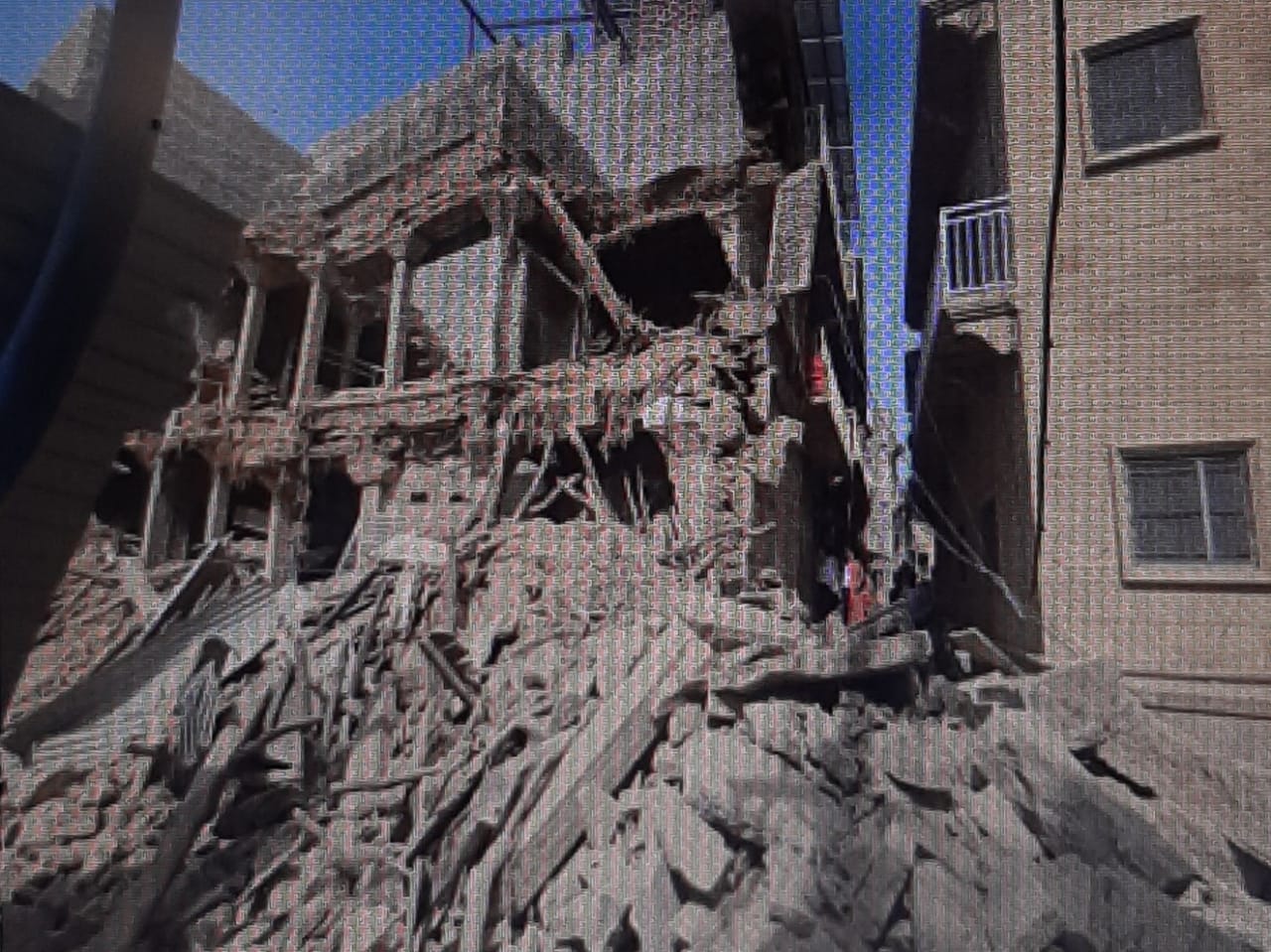
Even as I sat down to write this article, I came across a news report which stated that a 250 year old historic Jain Trust property had collapsed due to illegal basement excavation near Sonar Fort in Rajasthan’s Jaisalmer.[i] The historic building, known as ‘Upasara’ (a traditional place of stay for Jain saints), was located directly behind the iconic Patwa Haveli within the regulated 300 metre zone of Sonar Fort. Fortunately, ten labourers managed to escape in the nick of time and there were no casualties.
In India we are so used to disasters (both natural and man-made) happening and precious human lives getting lost that we seldom pause to think about disasters just waiting to happen. The issue of fixing accountability does not even cross our minds. This is a telling commentary on how the administration, at all level, functions and how citizens think and respond to emerging situations.
In this article, I would be looking at issues surrounding the Jaisalmer fort which has all the trappings of a disaster in the making. This fort had been immortalised in Satyajeet Ray’s 1974 detective thriller ‘Sonar Kella’, which gave a huge boost to tourists flocking to Jaisalmer, and is the only ‘living fort’ in the country. It is a recognized UNESCO World Heritage Site. The large influx of tourists to Jaisalmer to see the Golden Fort has given a boost to the local economy. Yet it is also contributing to crumbling of the almost nine hundred year old fortress.
Jaisalmer fort, built of yellow sandstone, is the largest fort in Rajasthan. As a living fort, an estimated three to five thousand original residents continue to reside inside the fort. However, as tourism boomed, some residential buildings inside the fort have been converted into hotels and home-stays. During the peak tourist season (October to March), about 400 tourists could be staying in 40 odd hotels inside Jaisalmer fort and those visiting during the day could be in the range of ten thousand or more.The ownership of the fort continues to be with the Rawal family while the Archaeological Survey of India (ASI) is the custodian of the fort. This is because protection of monuments of national importance has been entrusted to ASI under the provisions of Ancient Monuments and Archaeological Sites and Remains Act, 1958 (AMASRA).
Why is the Sonar Quila (Golden Fort) under stress and facing conservation threat? Most experts believe that water seepage from overstressed open drains, large scale use of modern running water in bathrooms and toilets, ill-designed sewerage and drainage structures is contributing to weakening of the foundation and the yellow sandstone bastions. Coupled with this, excessive rain due to climate change, impact of two earthquakes in 2001 and 2009, unauthorized and unregulated structural changes in the buildings inside the fort (to meet the commercial demand of increased tourist inflow), difficulty in undertaking conservation measures inside a living fort and jurisdictional overlap among multiple authorities like the ASI, the district administration, the civic authorities, State Government and the owners as well as occupants of the properties render the task of conservation difficult. Everyone is agreed that the drainage system needs complete overhaul. Poor solid and liquid waste management system poses serious health and hygiene risks for residents as well as tourists. Yet authorities find it difficult to execute the schemes. All construction in a 300 metre radius from the fort is also banned by law. Yet illegal constructions, excavations continue unabated.
The ownership of the Fort is with the Rawal family. ASI is legally responsible for conservation, security and upkeep of the national monument. Yet it has no authority to take action against those indulging in unauthorised construction inside the fort or in the 300 metre radius outside the fort. Inadequate resources and lack of manpower add to the plight of the ASI. It has no control over any of the multiple authorities listed above.
Over the years, at least three decisions of the Rajasthan High Court can be cited which have legally strengthened the position of the ASI. In Hari Shanker v. Union of India (1999), the Rajasthan High Court ruled definitively that the Jaisalmer Fort and its entire precincts constitute a “protected area” under the AMASR Act. It clearly established that any alteration or new construction inside the fort without permission of ASI were illegal and subject to removal. This was further strengthened by the ruling of the High Court in Girdhar Memorial Charitable Trust & Anr. v. Union of India (2021) wherein the Court noted that minor “repair works” cannot be used as a loophole to mask new construction. In an ongoing Public Interest Litigation (PIL) filed by Sunil Paliwal in 2022, the High Court has decried the Municipal Council’s practice of regularizing constructions and issuing property deeds (pattas) within the fort’s prohibited and regulated zones. The administration has submitted to the court that they will not regularize any unauthorized construction within the 300-meter periphery of the fort, a protective measure also backed by UNESCO’s Site Management Plan.
Notwithstanding these judicial pronouncements, in practice, efforts to check unauthorised construction or encroachment in restricted area by the ASI and/or the District Administration often hit a judicial firewall of ‘humanitarian aspect’ involved. In a recent order[ii] of March, 2026 the Rajasthan High Court has imposed an interim stay on the demolition of houses built in the ‘prohibited’ area of Jaisalmer by ASI. Keeping in mind the fact that 350 to 400 houses had received eviction notices, the Court ordered the District Collector to appear in person with all records and the rehabilitation plan for affected families if constructions were found illegal. Such judicial interventions are not infrequent. Often the ‘immediate problems’ of affected persons outweigh the potential ‘loss of lives’ if disaster in the form of building collapse were to happen in future.
It may be noted that, more often than not, persons undertaking illegal construction or encroachment, ignore notices issued by the Municipal Council and/or the ASI. The commercial aspects, livelihood issues predominate. While there is no denying that the livelihood issues of thousands of people living in the vicinity of national monuments like the Sonar Quila in Jaisalmer cannot be discounted, over exploitation of a national heritage could also kill the hen that lays the golden egg.
Problems associated with the very existence of the fort are no longer theoretical. Illegal basement excavation in the vicinity of the 250 year old Jain Trust property led to its collapse earlier this month. The Fort itself has seen portions of the outer wall, turret walls and some structures within the fort collapse over the last two decades. Jaisalmer is now receiving more rain than it ever received over the past eight centuries. Thus, a potentially catastrophic disaster could happen triggered by natural events like cloudburst or earthquakes in the region.
The question is who would be responsible for such a tragedy where human lives could be lost apart from permanent loss of a World Heritage Site. Will it be the owners of the property? No. They will claim that conservation, security and maintenance of the national monument was the responsibility of the ASI. Will ASI be accountable then? No because they have been drawing the attention of all authorities right from the Ministry of Culture in Government of India, to the State Government, the District Administration, the Municipal Council and the rest. They have presented full facts before the High Court too. There have been some encouraging judicial orders but they have run into administrative hurdles. Nor would the Tourism department of the State Government, the District Administration or the local Municipal Council accept any responsibility. Local residents and occupants inside the fort are more worried about their present livelihood issues than thinking of the future. Politicians could not care less. People who flout orders with impunity have administrative, political, business and legal clout.
It seems that, in the end, as and when disaster happens, the Police, the State Disaster Response Force (SDRF) and National Disaster Response Force (NDRF) would be pressed into service to look for survivors in the debris; condolence messages would pour in; ex-gratia relief would be announced and disbursed by the State Government; an Enquiry Committee headed by a Judge of the High Court would be set up to fix responsibility. Survivors would rummage through the rubble to extract whatever they can and begin life afresh and live with the memory of the dead. Sonar Quila too would fade away along with the memories. We have seen this happen with the stampede tragedy in Prayagraj during Mahakumbh 2025 and at New Delhi Railway Station in February 2025. Not only no authority was held accountable, all efforts were made to cover up the tragedy. The ‘Act of God’ alibi and destiny serves as a very useful and effective explanation for authorities to evade responsibility and for citizens to quell their troubled conscience. The sad truth is that no one would be held responsible for an avoidable disaster that was waiting to happen as no government has ever felt or will feel the need to be accountable to the people.
(Sunil Kumar is a visiting Senior Fellow associated with the Centre for Cooperative Federalism and Multilevel Governance in Pune International Centre and a former civil servant. Views expressed are personal.)
[i] 250-year-old historic Jain Trust property collapses due to illegal basement excavation near Sonar Fort in Rajasthan’s Jaisalmer; ANI; 17th June 2026; https://www.aninews.in/news/national/general-news/250-year-old-historic-jain-trust-property-collapses-due-to-illegal-basement-excavation-near-sonar-fort-in-rajasthans-jaisalmer20260617074510/
[ii] High Court stays demolition of houses in Jaisalmer’s prohibited area: Questions administration regarding rehabilitation plan for hundreds of families; hearing on 8th; https://www.bhaskarenglish.in/local/rajasthan/news/jaisalmer-high-court-stays-demolition-rehabilitation-plan-hearing-8th-137572816.html