

The movement of Muslim community from SP to BSP would be possible only if the community is assured of Brahmi-Dalit communities getting consolidated in favour of BSP. The community has been politically marginalized during the last 12 years and more than anything else has been fight battle for “samman and Suraksha” (respect and security). There is rampant feeling in the community that these issues are of utmost significance, which needed attention from any political party seeking its support, writes senior journalist M Hasan
Lucknow, February 7: The Bahujan Samaj Party (BSP) has launched hectic exercise to regain lost ground in Uttar Pradesh. After facing successive electoral debacle during the last 20 years, the party leadership has firmly veered round to the view that without broader Dalit-Brahmin-Muslim-OBC combination the task in 2027 UP assembly election would be difficult. The BSP chief Mayawati has thus been trying to replay 2007 formula which had for the first time brought the party to power on its own strength.
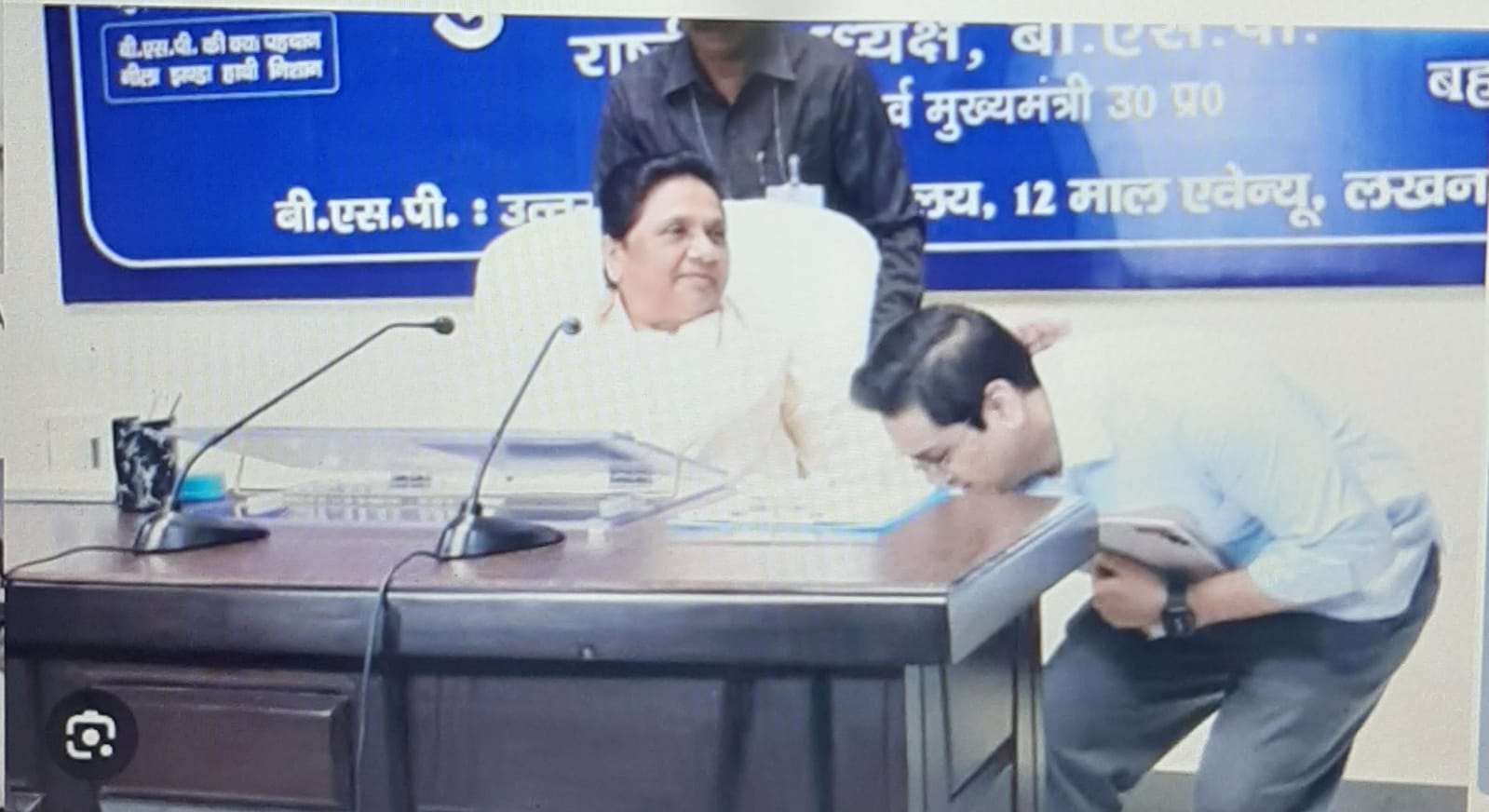
Thus, with an eye on next year’s electoral exercise around 3000 party leaders, consisting of district, assembly constituencies and other office-bearers, assembled in Lucknow today to get instructions from the leadership. During the day-long meeting at the BSP headquarters Mayawati has directed the grassroot leaders to launch the preparations immediately. In view of considerable changes in SIR in electoral rolls, the party has decided to reconstitute local committees.
Mayawati’s “Brahmin card” was at full display in her quick and sharp reaction against the title of the Netflix movie “Ghuskhor Pandat”. Mayawati, who normally avoided reactions on such issues, condemned the title and demanded the action against the director and producer. Though the UP BJP government also promptly took action against the director by registering FIR, Mayawati’s tone and tenor on the issue was very focused. At today’s conference Mayawati’s successor Akash Aanad was also at the centerstage.
However, at a time when the party has been making last-ditch efforts to stage a comeback, Mayawati’s projected Brahmin-Muslim card would be watched with interest. While 2007 Brahmin face Satish Chandra Mishra is in party, the then “Muslim face” Nasimuddin Siddique”, after leaving Congress last month, has been trying for another greener pasture. As of now the BSP doesnot have pan-UP Muslim face to bring back the community to its fold. Even though there are reports of “Brahmin community” being disenchanted with the BJP in UP, will it really move away from saffron brigade in debatable. The political conditions in 2007 were absolutely different when this mobilzation had worked.
Similarly, the movement of Muslim community from SP to BSP would be possible only if the community is assured of Brahmi-Dalit communities getting consolidated in favour of BSP. The community has been politically marginalized during the last 12 years and more than anything else has been fight battle for “samman and Suraksha” (respect and security). There is rampant feeling in the community that these issues are of utmost significance, which needed attention from any political party seeking its support.
Mayawati had sprung on the political horizon under the guidance of Dalit Icon Kanshi Ram to become first Dalit chief minister of UP on her own strength in 2007 and her officers had then projected her as strong “Prime Ministerial candidate” in 2009 Lok Sabha election. Now nearly after two decades down the line there has been sharp downfall in the fortune of the party. Kanshi Ram had made a strong Dalit base encompassing all communities but it has been squandered over the years. The drift was significant during 2007-2012 BSP regime when there was special political stress on “Jatav” community, which had alienated others. The Pasis, the second most important Dalit segment had then become quite vocal on the issue. “Kanshi Ram ki Kamai, Mayawati ne Gavai” (Mayawati wasted gains of Kanshi Ram) was then oft-repeated slogan by the rivals who were forced to leave the party after BSP’s 2007 stint in power.
The party’s national vote share in 2009 general election was 6.2 percent, which came down to 4.2 percent in 2014 (no seat), 3.7 percent in 2019 with victory on ten UP seats in alliance with Samajwadi Party and 2.04 percent in 2024. Except in 2019 the BSP had no truck with any other party during the remaining three previous Lok Sabha elections.
At present not considering a recognizable national space for the Dalit organization, if the BSP is to survive in its mother state UP it has to fight against BJP’s 41.37 percent and SP’s 33.59 percent vote share. The BSP’s vote share in 2024 Lok Sabha election in UP, when it had contested all 80 seats was around 9.24 percent. As against any BSP’s victory on any seat, the newly floated rival Dalit organization Azad Samaj Party’s president Chandrashekhar Azad captured Nagina Lok Sabha seat from West UP. Since Shekhar has been making deft effort to make dent into BSP’s vote bank, Mayawati specially devised action plan for west UP to retrieve fragmented Dalit votes.
Now for the BSP the 2027 elections are “do-or-die” battle and the grassroots leaders were today asked to work for the victory. Since alliance of at least three or more dominant castes are necessary to capture power in UP, the BSP is now hankering for Dalit-Backward and Muslim tie-up. However, BSP, no longer a unified voice of all Dalit communities, will have to bring them on one platform before working on others. At least 30 percent plus vote share is a vital figure to come to power in UP, the BSP seems to have a tall order to move from 12 percent (2022 results) to catch this figure. It will have to dislodge the well-entrenched SP from the second pedestal to achieve the tall target to take on saffron brigade.
(M Hasan is former Chief of Bureau, Hindustan Times, Lucknow)