

It is high time usage of the term ‘local bodies’ with reference to the Panchayats and Municipalities is discontinued from the political and administrative lexicon and replaced with ‘local government’ or ‘local self-government’. The Panchayati Raj and Municipal Acts and Rules of all states need to be critically analysed and provisions which weaken local governments need to be identified and deleted by the State Legislature, writes former IAS officer Sunil Kumar
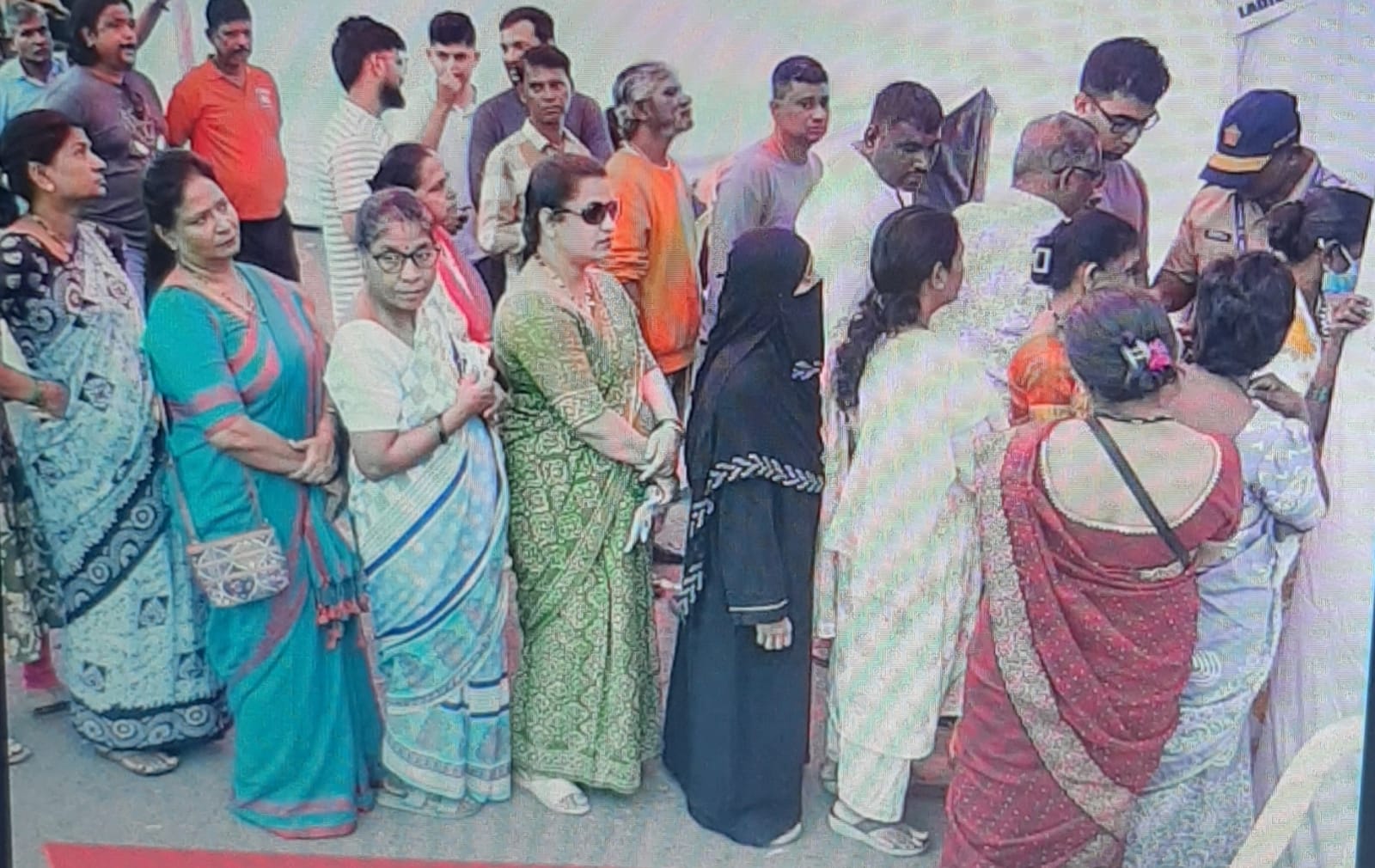
Recent civic elections in Maharashtra were widely covered in the media – print, electronic as well as digital media[i]. Election to Brihan Mumbai Municipal Corporation (BMMC) received particularly extensive coverage given the fact that the annual budget of BMMC was reported to be to the tune of Rs.74,427 crore in 2025-26, much more than several States of India[ii]. A striking feature of all these reports was that the elections were described as ‘local body elections’. In this article I will be examining the implications of treating the civic elections as elections to local bodies and not to local government.
The confusion is not with the reporters alone. It permeates the bureaucracy and the political parties as well. Quite often, the Panchayats and Municipalities are referred to as local bodies in government press releases[iii]. Even statutory reports prepared by the Comptroller & Auditor General (CAG) refer to Panchayats and Municipalities as local bodies and not local government[iv]. This situation prevails when the Panchayats and the Municipalities have been referred to as “institutions of local self-government” in Part IX and IXA of the Indian constitution. In both article 243G and 243W the phrase “such powers and authority as may be necessary to enable them to function as institutions of self-government” has been used. Nowhere has the term ‘local body’ been used in the Indian constitution.
The Supreme Court too has in the State of UP vs Pradhan Sangha Kshettra Samiti (1995) and Rajendra Shankar Shukla v. State of Chhattisgarh (2015) held that panchayats are not mere administrative agencies but are intended to be units of self-government and are meant to exercise governmental authority and not just carry out state instructions.
Yet most political leaders belonging to different political parties continue to refer to the Panchayats and Municipalities as local bodies in their speeches, statements and political discourse. The term ‘local body’ was widely in use during colonial times and continued in administrative usage after independence. Politicians continue to use it even after the coming into effect of the 73rd & 74th Constitution Amendment Acts as it perhaps grants them political comfort and ambiguity. Use of the term ‘local government’ for Panchayats and Municipalities would mean acknowledgment of their autonomy, authority and recognition as a distinct tier of governance. It is only in Kerala, cutting across political ideology, that leaders use the term local government or local self-government and their elected representatives as local government representatives. Incidentally, Kerala is the only state which has set up a department for local self-government and has a Minister of local self-government. This department looks after both rural and urban local governments.
Why is this linguistic difference important? Is it just semantics? The answer is in the negative. The language used reflects and reinforces a hierarchical view in which sub-state institutions are treated as administrative appendages of state governments rather than as a constitutionally recognised tier of governance. Political leaders as well as the bureaucracy continue to view the Panchayats and Municipalities as mere ‘implementing agencies’ of the centrally sponsored and state schemes. Continued use of the term ‘local bodies’ subtly legitimises state control, weakens their claims to fiscal and functional autonomy and makes delays in elections or release of funds seem acceptable. If the term ‘local governments’ is used instead, it will strengthen their democratic legitimacy, reinforce their constitutional status as ‘institutions of local self-government’ and normalise expectations of autonomy and accountability.
Continued usage of the term ‘local bodies’ instead of ‘local government’ in political discourse deeply impacts all stakeholders. Union Ministers feel that devolution of funds to Panchayats and Municipalities based on recommendations of the Central Finance Commission (CFC) is something similar to release of scheme funds and they should derive full credit for all works that are undertaken with CFC funds in the Panchayats and Municipalities. Senior officers of the union and state governments feel that Panchayats and Municipalities are subordinate offices and can be ordered around at will. This takes the shape of ‘tied grants’ and even directions to convene and set agenda of meetings of the Gram Sabha by Ministries/departments of Government of India! District Collectors carry this one step forward since they have also been vested with the power to suspend and dismiss elected representatives of local governments. Unfunded mandates from union and state governments seem to be the order of the day for Panchayats and Municipalities.
Even constitutional bodies like the State Finance Commissions tend to adopt a grant-oriented approach, focusing on tied transfers, scheme-based allocations, and incremental gap-filling grants when they view the Panchayats and Municipalities as ‘local bodies’. In a state like Kerala, where these are looked upon as ‘local self-government’ (LSG), the SFCs frame their recommendations in governmental terms -emphasising predictable tax devolution, formula-based sharing of state revenues, revenue-raising powers, and the principles of fiscal autonomy and accountability. All SFCs in Kerala have consistently treated local governments as a distinct tier entitled to a share in the state’s divisible pool rather than as recipients of discretionary assistance. Simply put, the moment the Panchayats and Municipalities begin to be treated like local government, then the culture of patronage (Maai-Baap culture) will come to an end.
Likewise, despite clear constitutional provisions which mandate compulsory holding of elections before the expiry of the five year term of Panchayats and Municipalities (Article 243E (3)(a) & 243U (3)(a)), civic elections are delayed as a matter of routine in most states. Since these are called ‘local body polls’, neither the political parties nor the citizens seem to take umbrage. State government and the bureaucracy are the major stakeholders responsible for the delay and the State Election Commission (more often than not) seem to play along. Even the Courts take a lenient view to these delays and at times different bench of the High Courts and Supreme Court give conflicting ruling on the issue of holding elections. The same political parties would hit the streets if elections to State legislative Assemblies were to be delayed!
The elected representatives of the Panchayats and Municipalities (who number an astounding 3.3 million) seem to feel that they are ‘lesser’ elected representatives compared to MPs and MLAs in every sense be it in the matter of salaries & perks, privileges of office or even social status. The bureaucracy has a stranglehold over these elected representatives unlike MPs and MLAs. The low ‘self-esteem’ of ERs is possibly due to the fact that they feel it is the District Collector who represents government and they are not part of any ‘government’. Even citizens feel that the District Collector and the Superintendent of Police represent government in the district while their elected representatives in Panchayats and Municipalities do not do so.
It is high time usage of the term ‘local bodies’ with reference to the Panchayats and Municipalities is discontinued from the political and administrative lexicon and replaced with ‘local government’ or ‘local self-government’. The Panchayati Raj and Municipal Acts and Rules of all states need to be critically analysed and provisions which weaken local governments need to be identified and deleted by the State Legislature. A beginning has to be made now. The onus is primarily on the leaders of all national and regional political parties and the bureaucracy. The double speak inherent in constitutionally created local governments and referring to them political speech as ‘local bodies’ in political speech should clearly become untenable and unacceptable. Language, law and practice must converge.
(Sunil Kumar is a visiting Senior Fellow associated with the Centre for Cooperative Federalism & Multilevel Governance in Pune International Centre and a former civil servant. Views expressed are personal.)
[i] Maharashtra civic polls: BJP clinches 1,425 seats across 29 municipal corporations; January 17, 2026 04:25 pm IST – Mumbai;https://www.thehindu.com/news/national/maharashtra/maharashtra-civic-polls-bjp-clinches-1425-seats-across-29-municipal-corporations/article70517641.ece; Maharashtra local body polls:ISLAM party ends Congress dominance in Malegaon; gets 35 seats; January 17, 2026; The Times of India; https://timesofindia.indiatimes.com/city/pune/maharashtra-local-body-polls-islam-party-ends-congress-dominance-in-malegaon-gets-35-seats/articleshow/126600399.cms ; Campaigning ends in Maharashtra for civic body polls; January 13, 2026, 7.45 pm; https://www.newsonair.gov.in/campaigning-ends-in-maharashtra-for-civic-body-polls/
[ii] BMC elections: Mumbai votes for a civic body richer than some Indian states; ET OnlineLast Updated: Jan 15, 2026, 04:33:00 PM IST;https://economictimes.indiatimes.com/news/politics-and-nation/bmc-elections-mumbai-votes-for-a-civic-body-richer-than-some-indian-states/articleshow/126544307.cms?from=mdr
[iii] Centre Releases ₹213.9 Crores under XV Finance Commission Grants to strengthen rural local bodies in Assam; PIB Delhi, January 20, 2026; https://www.pib.gov.in/PressReleasePage.aspx?PRID=2216373®=3&lang=2;
[iv] Report No. 1 of 2025 – Report on Local Bodies, Government of Chhattisgarh for the period ended March 2022; https://cag.gov.in/en/audit-report/details/121742