

The institution of District Collector (a colonial legacy) in its present form, ends up weakening local governments. The office and post of the District Collector needs to be brought within the ambit and control of the District Panchayat as has been recommended by the Second Administrative Reforms Commission. There is need to reimagine the role of Block and District Panchayats, writes former IAS officer Sunil Kumar
Mahatma Gandhi, the father of the nation, had remarked – “Panchayati Raj represents true democracy realised. We would regard the humblest and the lowest Indian as being equally the ruler of India with the tallest in the land”. As a people, we never tire of paying lip service to his ideals. Yet even after 78 years of independence and 32 years of 73rd & 74th Constitution Amendment Acts (CAA), strong local governments remain a dream. All attempts to extend and strengthen grassroots democracy have, so far, met with limited success in most parts of the country and especially in Uttar Pradesh.
The Panchayati Raj Institutions (PRIs) were created to bring democracy closer to the people. The idea was simple: decisions about villages should be taken by villagers themselves. The 73rd CAA gave constitutional status to Panchayats and promised them real power over local development. Yet they function more as ‘implementing agencies’ for government schemes rather than as genuine local governments. Gram Sabhas are looked upon as a ‘captive body’ by the Government rather than as an ‘autonomous body’ which takes decisions to shape the future of the Gram Panchayats!
Any functional and effective institution of governance must meet certain basic conditions relating inter alia to their administrative and financial viability, authority over functionaries, clarity regarding their role and responsibilities, financial autonomy and accountability.
Administrative & Financial Viability
Uttar Pradesh has approximately 58,000 GPs, 826 Block Panchayats and 75 District Panchayats. According to the 2011 census, the rural population of UP stood at about 15.50 crore. So the average population per GP currently comes to nearly 2650 persons, which does not seem to make for administrative and financial viability when viewed from the perspective of full-time government functionaries assigned to GPs and the financial resources available with them. Improvement in road and telecommunication infrastructure has shrunk physical distance and brought people closer. Fixing the average size of Gram Panchayats between 10000 to 25000 in Uttar Pradesh (like adjoining Bihar) would make them administratively and financially viable units.
State Delimitation Commission
The reorganization of both rural and urban local governments ought to be undertaken by an independent State Delimitation Commission for Local Government. Legal provision would need to be incorporated in the State Panchayati Raj and Municipal Acts. These would need to be set up immediately after the results of the Census are released. The State Delimitation Commission should be headed by a retired Supreme Court or High Court judge and be tasked with traditional functions like revision of the boundaries of existing constituencies of all tiers of local governments (rural and urban) with rotation of seats as per extant reservation policy of the State governments. They should also examine the administrative and financial viability of rural and urban local governments. Their recommendations should include transition from rural to urban local government, based upon objective criteria.
Authority over Functionaries
Following the reorganization exercise, the number of GPs in UP could get reduced to about 15,000. This would ensure availability of adequate number of village level functionaries for redeployment in the GPs without much difficulty. It would also be possible for the State to then transfer officials well versed in budget preparation and expenditure management along with proficiency in digital technology to the GPs.
Government of UP must proceed forthwith to set up a dedicated cadre of local government as is the case in several States like Kerala, Madhya Pradesh etc. The selection would be by the State Public Service Commission and the Governor would remain their appointing authority. Gazetted officers would need to be appointed as executive officers in all local governments including GPs. Officers of the local government cadre would be able to work in both urban and rural local governments and also go on deputation to the state and union governments. All India Service and Provincial Civil Service officers would also be able to go on deputation to local governments. While on deputation, they would work under the administrative control of local government.
The institution of District Collector (a colonial legacy) in its present form, ends up weakening local governments. The office and post of the District Collector needs to be brought within the ambit and control of the District Panchayat as has been recommended by the Second Administrative Reforms Commission.
There is need to reimagine the role of Block and District Panchayats. Since the government is committed to obliterating the rural-urban divide in the drive towards Viksit Bharat @ 2047, it would be appropriate if the rural and urban distinction is removed and Block Panchayats and District Panchayats have elected members representing the urban and rural areas in the Block and District respectively. This step would infuse new life into these currently moribund institutions. District Panchayat as District Government with District Collector reporting to the District Panchayat President would go a long way in strengthening all local governments.
Financial Autonomy
The PRIs in UP are almost totally dependent on transfer of funds based on the recommendations of the Central and State Finance Commssions with hardly any own source of revenue. Without money, no institution can function independently. Panchayats must be allowed to raise their own revenue through local taxes such as property tax, market fees and service charges. State Finance Commissions, which are meant to recommend how funds should be shared with Panchayats, must be taken seriously and their recommendations implemented in time.
Share in GST
Over the years several tax revenue streams, which were earlier available to rural and urban local governments, have been subsumed under the Goods & Services Tax (GST). In my view the time is ripe for evolving political consensus around the proposal to provide one-sixth share in both CGST and SGST to local governments[i]. This would remove the uncertainty in flow of funds to local governments and enable them to plan and execute their schemes in a better way.
The increased flow of funds would also warrant insertion of a provision for setting up a Consolidated Fund of Local Government in the Constitution by amending Article 266. All funds from the Union and State government, including those derived from the devolution of funds based on recommendation of the Union and State Finance Commissions, would directly flow into this Fund. States would also need to transfer an appropriate share of the State budget to local governments as is the case in the state of Kerala. Since all local governments, urban and rural, have a unique LGD code, there should not be any difficulty in maintaining proper accounts for every local government by the Reserve Bank of India.
Accountability Mechanisms
With increased flow of funds, steps should be taken to enhance and strengthen accountability mechanisms. People should be able to see how Panchayat funds are being used. Social audits, where villagers review development works and spending, should be made compulsory. Panchayats should publicly display details of budgets, expenses, assets and beneficiaries, both online and on notice boards in the village. Transparency builds trust and discourages corruption.
Improved and timely audit of funds of local government by auditors of Local Fund Audit department with quality control ensured by the Accountant General (AG) of the State, should be made mandatory. There is a case for setting up an institution like the Public Accounts Committee at the District level within District Panchayat to undertake in-depth examination of serious objections reported by the Audit. This would go a long way in ensuring accountability of local government and departmental officials to the elected representatives.
The State government must take immediate steps to prepare and notify the Budget Manual, Accounts Manual and Audit Manual for all tiers of local government with the approval of the State Accountant General. This would streamline financial administration in the local governments and ensure integrity of financial data relating to local governments.
Strengthening Grassroot Democracy
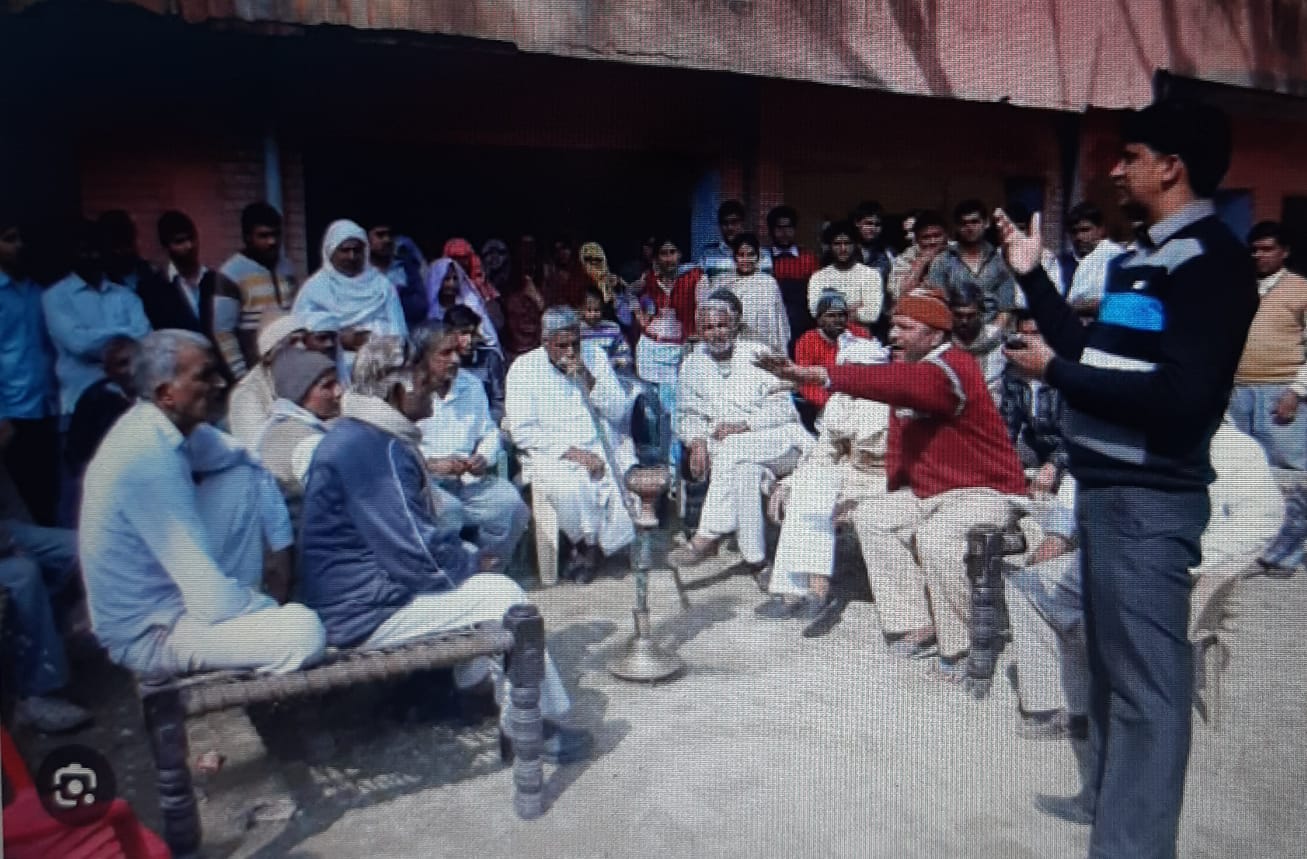
Undoubtedly the foundation of the Panchayati Raj system is the Gram Sabha, which includes all adult residents of a village. This is the only constitutional institution for direct democracy. However, with the reorganization of GPs into larger administrative units, it would be well neigh impossible to organize meetings of Gram Sabha which are well attended. In reality, even now the Gram Sabha meetings in Uttar Pradesh are poorly attended and decisions are often taken by a few influential people. So provision for Ward Sabha meetings would need to be incorporated in the Panchayati Raj Act. These would facilitate greater and meaningful participation of local residents. These smaller groups can discuss local problems and pass their suggestions/recommendations to the Gram Sabha.
While elaborate rules and procedures have been laid down for conducting meetings of Vidhan Sabha and Lok Sabha, no such manual containing rules and procedures for conducting meetings of the Ward Sabha / Gram Sabha exist in any state. The state could take a lead in this direction. Elected members, officials and citizens need to be suitably trained so that these institutions can be effectively used to raise issues of concern by citizens and make the executive (Gram Panchayat headed by Pradhan) responsible and accountable to the Gram Sabha. This would warrant an independent presiding officer for the Gram Sabha with independent secretariat and separate budget. Details can be worked out.
Clarity of Role & Responsibility
Despite transfer of functions to PRIs as stipulated in the Eleventh Schedule, much of it remains on paper. The real control is exercised by the line departments. Line departments led by the Rural Development department function in parallel to local governments. This ends up weakening the elected local governments as line departments are loath to let go their control over finance and functionaries. The role and responsibility of GP/BP/DP must be clearly demarcated and local governments must be made responsible for ensuring delivery of services to the citizens.
The process of appropriate transfer of functions and functionaries to local governments could receive a fillip if a ‘Local Government list’ and ‘Concurrent list between State and Local government’ is inserted in the Seventh Schedule of the Constitution in lieu of Eleventh & Twelfth Schedule. While the power to legislate could remain with the State legislature, rule-making powers may be extended to the local governments. The State government should also consider setting up a unified department of Local Government to oversee the functioning of both rural and urban local governments as is the case in Kerala.
Full time Activity
It must be recognized that representing the people in rural and urban local government is a full-time and not a part-time activity. Accordingly, the honorarium / salary payable to elected representatives must be an adequate index of their time and effort. They need to be supported in monetary terms as well as through physical infrastructure and quality manpower.
Power of Removal
The existing provisions related to suspension and removal of elected representatives by the District Collector/ State Government are non-democratic in character and must be immediately deleted. The right to recall should be vested in the Gram Sabha. The office of an Ombudsman can be set up in districts to conduct inquiry into allegations of corruption/misuse of power. Suitable mechanisms can be designed in this regard.
Training of Elected Representatives
Training of ERs needs to be totally revamped. Instead of wasting time in trying to make them aware of various government rules and procedures, they should be imparted leadership training. How to identify problems and find optimal solutions, exercise effective control over local government bureaucracy and understand the policy implications of various options presented before them would render better results in term of good governance. To ensure that decisions of local government do not flout legal provisions and financial rules should be the responsibility of the local government bureaucracy. This would mean that while all proposals would need the approval of the Pradhan or the Chairman of the statutory committees of the GP, the power to sign cheques and release payment would be vested in the bureaucracy. Making Pradhan a joint signatory of payment cheques has reduced them to the level of subordinates.
Revive Nyaya Panchayats
We believe that the old system of Nyaya Panchayat needs to be revived. This would ensure quick disposal of petty cases which otherwise clog the lower courts. The model in neighboring Bihar could be studied and adopted as it offers a legally backed, community-based model of dispute resolution that is accessible and low cost. The State could study the provisions of the Nyaya Panchayats Bill, 2009 which was introduced by the Ministry of Panchayati Raj in the Parliament. This would go a long way in reducing pendency in lower courts.
Some of the reforms proposed above would require constitutional amendments. A lot many can be implemented by the state government without any difficulty. A broad consensus can be built around the proposed set of reforms.
In conclusion, strengthening PRIs is essential for deepening democracy and achieving balanced development in India. True grassroots democracy can succeed only when Panchayats are trusted, respected and given the authority to govern. India cannot become a developed country if it has weak local governments. Strong and effective local governments, endowed with funds, functions and functionaries, armed with constitutional and legal authority, alone can succeed in providing good governance to citizens. Local government need to be viewed as the first tier of government (and not third-tier) for citizen-centric governance. The time for the next generation of economic and administrative reforms is now and Uttar Pradesh can take the lead and become the torch bearer in this regard.
(Sunil Kumar is a visiting Senior Fellow associated with Centre for co-operative Federalism & Multi-level Governance in Pune International Centre and a former civil servant. View expressed are personal.)
[i] Second BPR Vithal Memorial Lecture by Dr. Vijay Kelkar, Hyderabad, December 1, 2023; https://cess.ac.in/bpr-vithal-memorial-lectures/